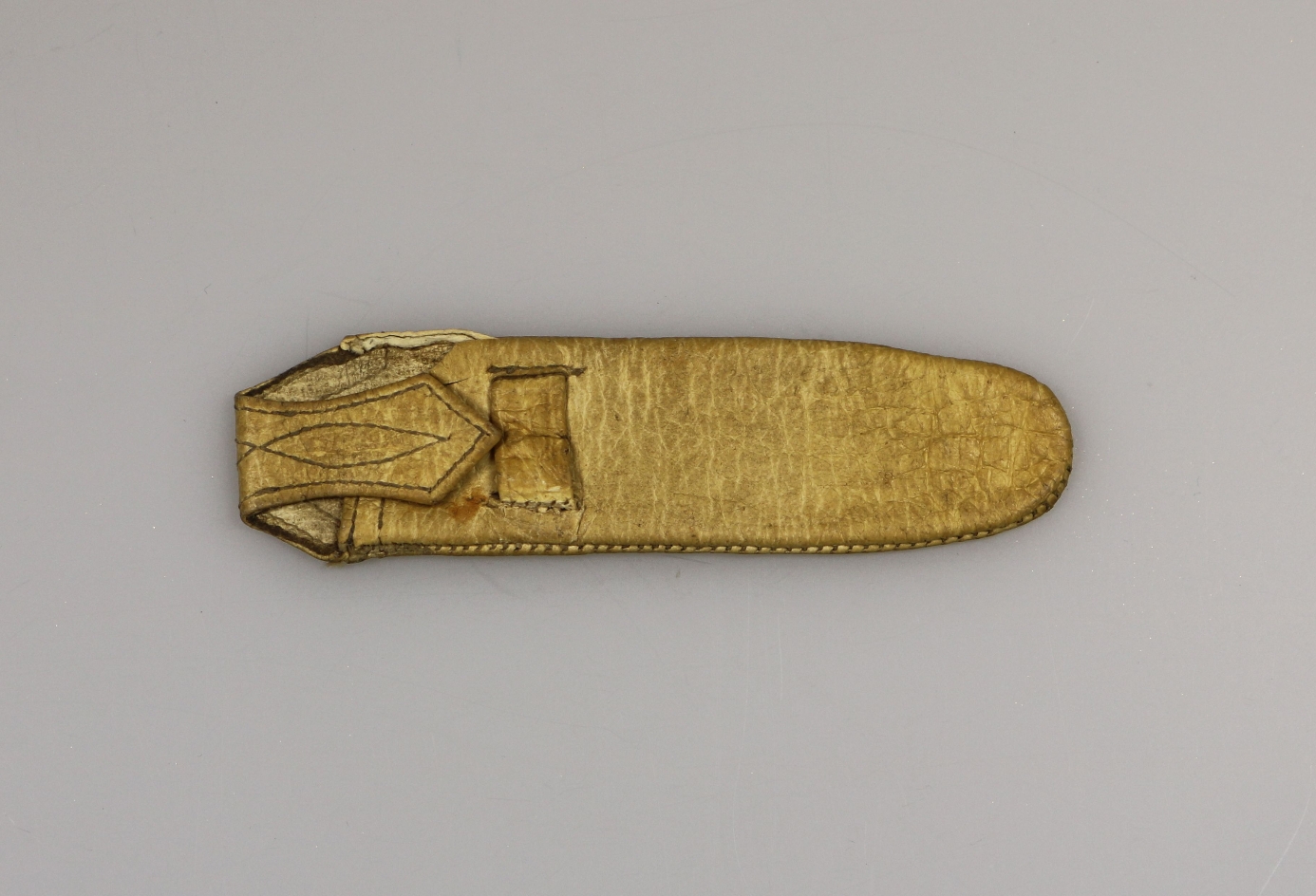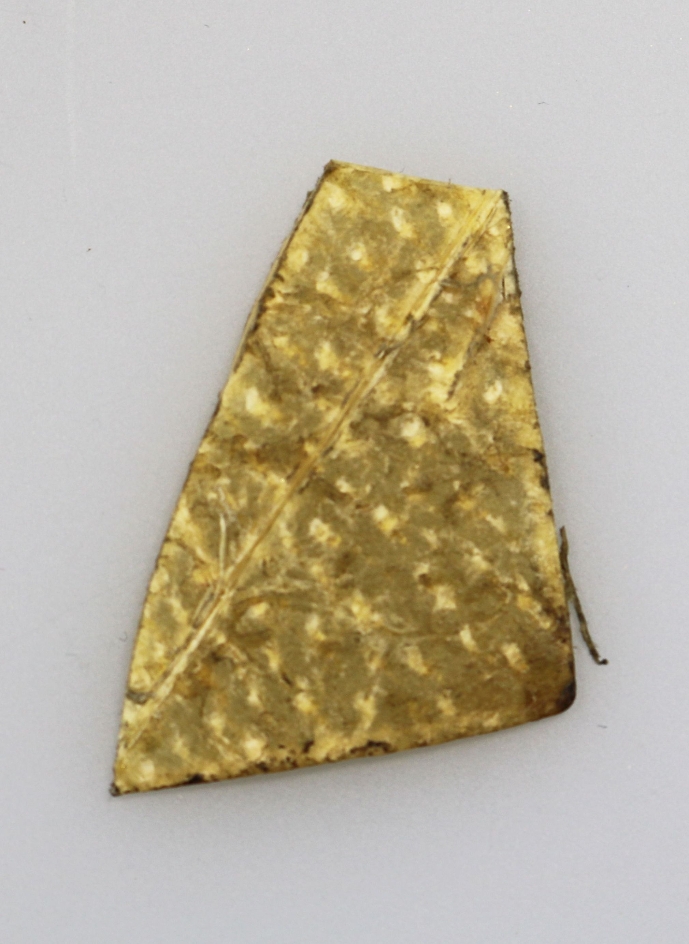
Immediately after his return, the member of the British House of Commons asked the well-known British pathologist and forensic pathologist Sir Bernard Spilsbury to examine the two artefacts brought back from Buchenwald. After visual and microscopic examination, he came to the conclusion that both artefacts "resemble human skin".
In October 2022, the historian Dr. Myfanwy Lloyd contacted the Buchenwald Memorial. As part of her research into the work of the British parliamentary delegation that had visited the liberated Buchenwald concentration camp on 21 April 1945, she had come across the estate of the British politician at Christchurch College in Oxford, which included the two artefacts from Buchenwald. The archivist in charge signalled that the two objects should be handed over to the Buchenwald Memorial.
The two objects and the piece of the lampshade, as well as the accompanying documentation, were finally handed over on 11 April 2023.
In 2024, the suspected pocket knife case was subjected to microscopic examination. It was found to consist of two pieces of human skin that had been glued together. The scar patterns on the surface of both sides of the case also confirm its human origin. The fibre structure and texture of the sample suggest that the skin had undergone some form of pre-treatment, possibly tanning.