Father and Son in Buchenwald
Ismar Freund held a doctorate in law and was a rabbi. He was born into a religious merchant family in Breslau on 11 April 1876. After completing his studies, he left his hometown in 1902 and moved to Berlin. There, he worked as a legal adviser to the Jewish community, lectured on state church law at the Higher Institute for Jewish Studies, and co-founded the Prussian Regional Association of Jewish Communities. He and his wife Elise had two sons and a daughter: Peter, Paul, and Marianne.
His eldest son, Peter, had served as rabbi of the Erfurt Jewish community since 1937. On the morning of 10 November 1938, his parents in Berlin learned of his arrest. They travelled to Erfurt to help him. As soon as they arrived, the Erfurt Gestapo arrested 62-year-old Ismar Freund. Father and son were reunited at Buchenwald concentration camp. They were released two weeks later shortly after one another.
Ismar Freund immediately began making preparations to leave for Palestine, where two of his children had moved long before. With the help of a British consul in Berlin, he obtained the necessary entry documents. In March 1939, Ismar and Elise Freund left Germany for good. Years later, in Jerusalem, where his son Peter also lived, Ismar Freund helped establish the State of Israel. He submitted a draft of an Israeli constitution in 1947. He also conducted scholarly research on the legal and political issues facing his new homeland. Ismar Freund died in Jerusalem in 1956, shortly before his eightieth birthday.
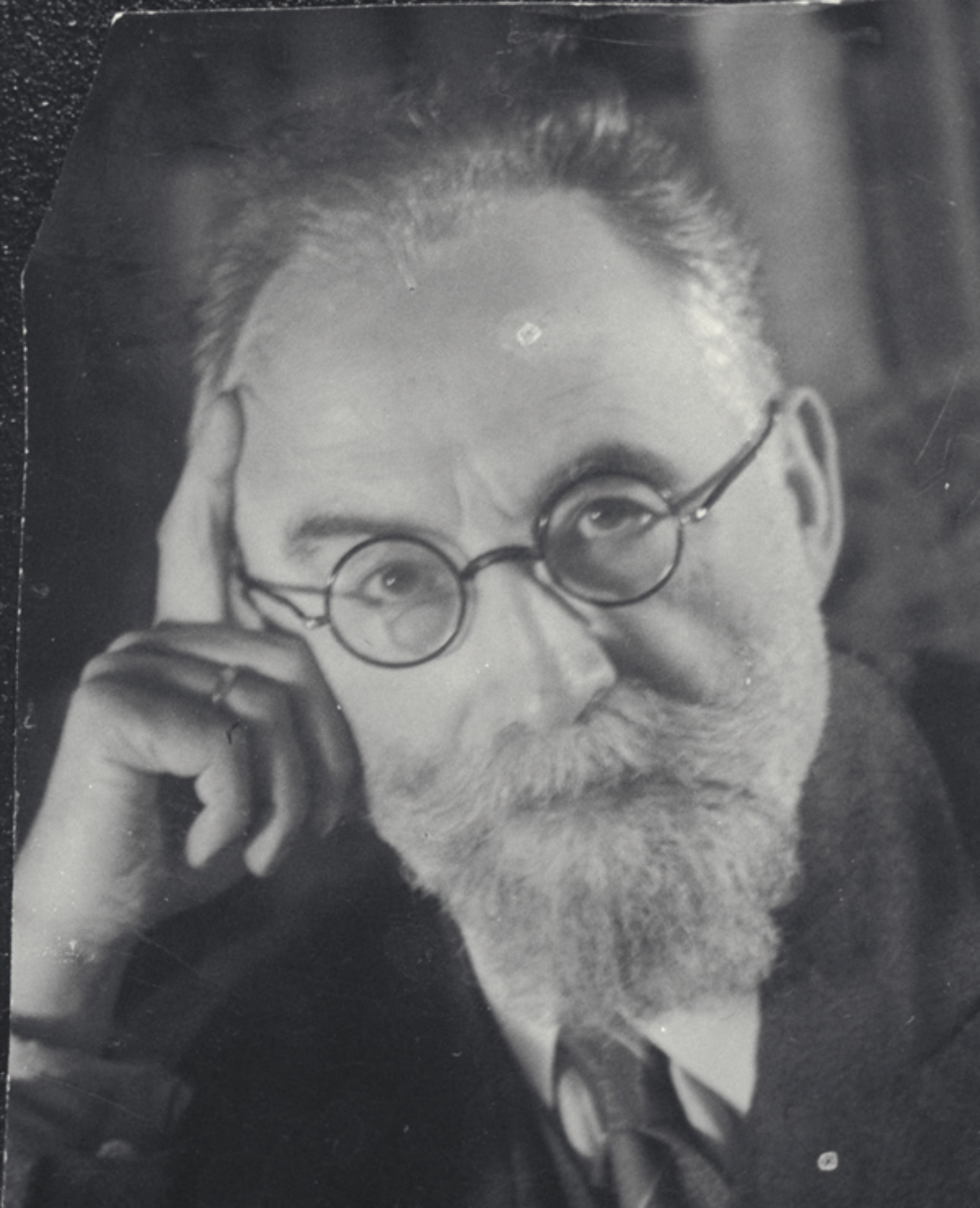
(Courtesy of the Leo Baeck Institute, New York)
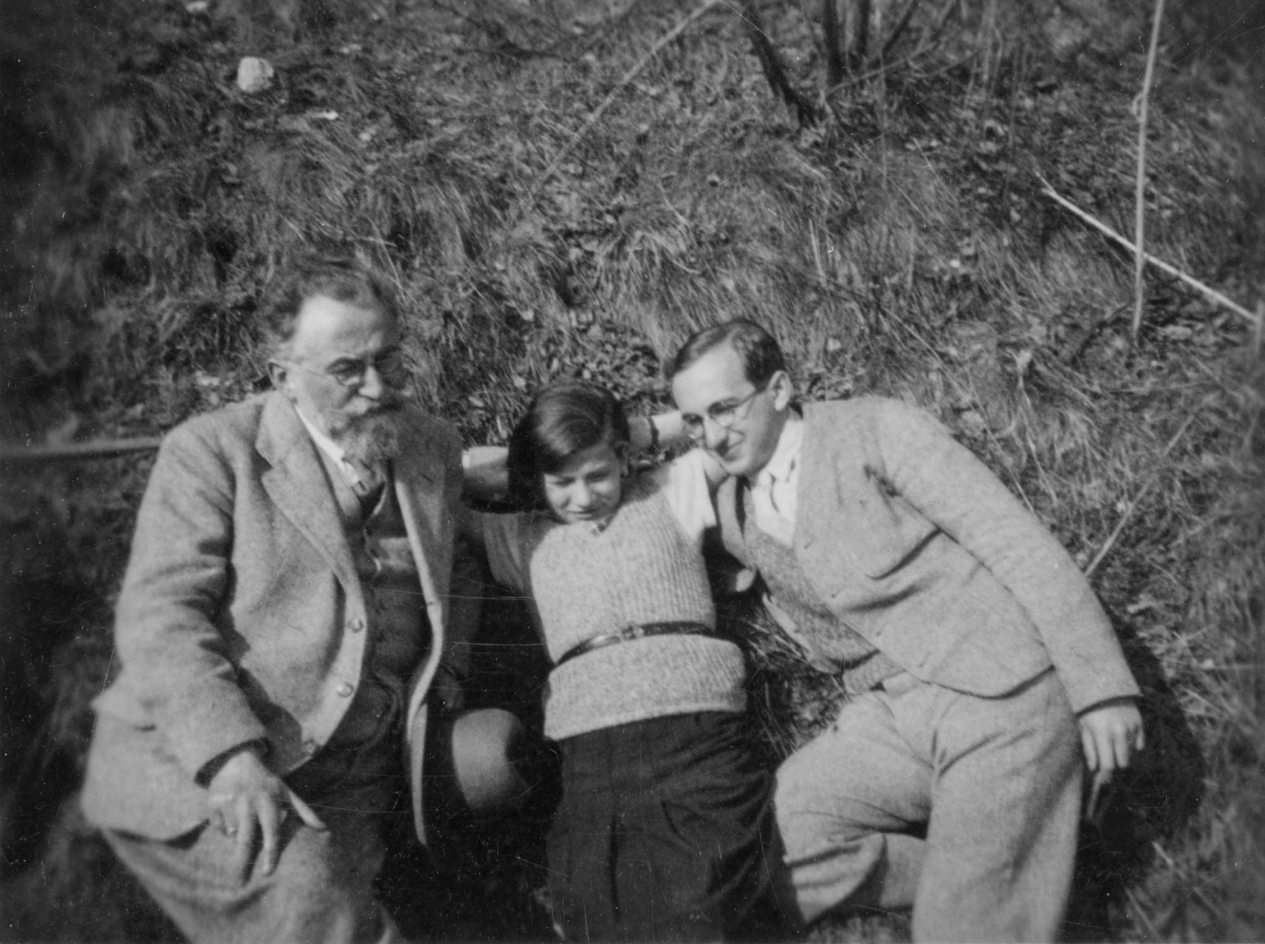
(Courtesy of The Ismar David Archive)
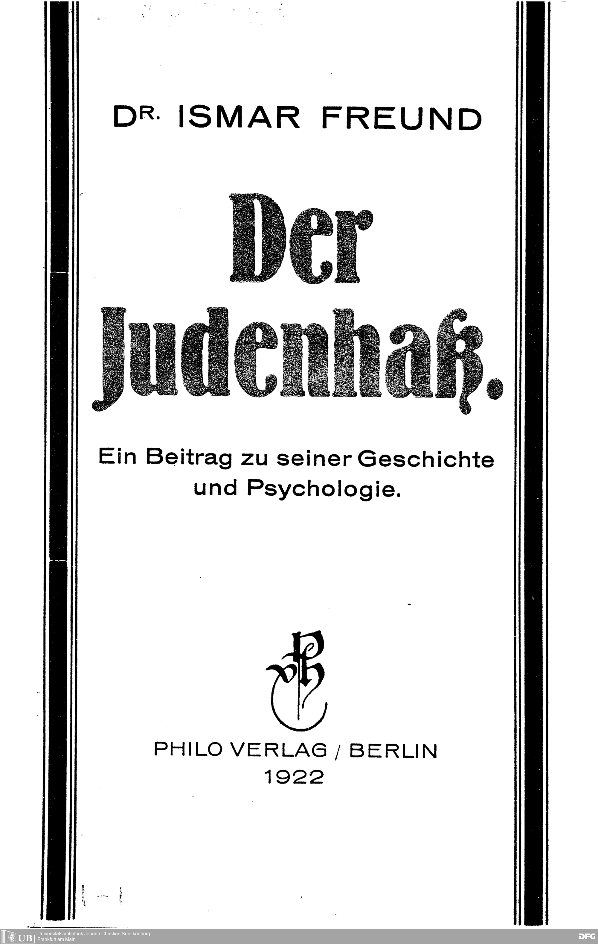
(Universitätsbibliothek Frankfurt am Main)
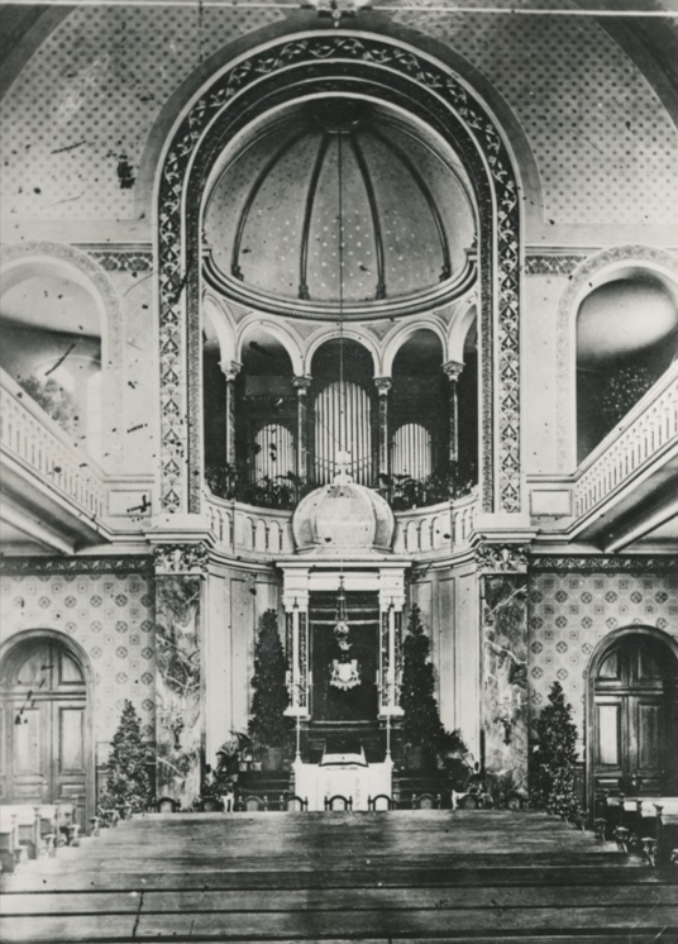
(Stadtarchiv/Stadtverwaltung Erfurt)
In Jerusalem, after World War II, Ismar Freund recorded his memories of his arrest and his time in Buchenwald concentration camp:
‘On the first morning after my arrival, I tried to find my son, who was the reason I had taken up residence in Buchenwald in the first place. […] I found him in a dreadful state: his hair soaked with blood, his face battered and covered in bruises.
“Father,” he called out to me from a distance, “everything is alright now.”
The people in Erfurt had been treated appallingly. The congregation members […] had been herded into a school gym. There, the Nazis had chased them around in circles with truncheons, as if in a circus ring. Anyone who fell was beaten until they bled.
I moved into the Erfurt barracks with my son so the two of us, huts back to back, could at least be together. […]
And otherwise, it was important to lift the spirits of those who, in many cases, were losing their grip on reality. […]
In my section of the barracks, I organised a daily prayer service. Soon, people from other areas followed my example. […] A factory owner from central Germany, who had heard me reciting the prayers from his own hut – there was, of course, no prayer book, and I had to recite the prayers from memory – said to me: “I’m not religious. I haven’t set foot in a synagogue for 10 years. I don’t understand a word of Hebrew either. But for the first time in my life, I understood what worship is.”
The following night, more nervous breakdowns and unrest occurred in the barracks. A regional court judge from Mainz, who was staying near us, came up to me and said: “We have to calm these people down. Otherwise, we risk the SS guards following through on their threats and shooting their machine guns into the barracks.” I stood up and addressed the inmates. I urged them to maintain their dignity and composure at all times, come what may. We must not give the torturers outside any reason to think that what was being done to the Jews is justified. I drew the people’s attention to the threats made by the SS guards and the danger that they would carry them out if calm were not restored to the camp immediately. It worked. The people calmed down, and the night passed without any further disturbances.’
(Yad Vashem)