Dispossessed in the concentration camp
Curt Mosenthal was a successful and respected businessman. In his home town of Eisenach, where he was born on 9 October 1890, he ran the A. Mosenthal Iron Merchants. His grandfather had founded the business in 1884. He served as a soldier during the First World War and was awarded the Iron Cross. In 1920, he married Johanna Eichengrün. Their daughter Ursel was born that same year, and their son Hans two years later.
On the night of 9–10 November 1938, rioting men broke into the Mosenthal family’s home. They smashed up the furnishings and took the couple away. Together with other Jewish families, they were herded into a sports hall. On 10 November, buses took the men and women towards Weimar. In Gotha, the women were released. The men reached Buchenwald concentration camp that very same day. For four weeks, Curt Mosenthal was at the mercy of the terror in the pogrom sub-camp. It was only after he had agreed to the sale of the family business that he was released on 9 December 1938.
In May 1939, the family managed to send their children to England. The parents followed three months later. Like most Jewish refugees, Curt Mosenthal was arrested by the British authorities as an ‘enemy alien’ and was temporarily interned on the Isle of Man. In October 1940, the family was finally allowed to leave for the USA. A suburb of New York became their new home, where the family set up a small hardware shop. Traumatised by persecution and flight, Johanna Mosenthal took her own life in 1943. Curt Mosenthal spent the last years of his life with his second wife in California. He died in 1972 at the age of 81. He never wanted to visit Germany again.
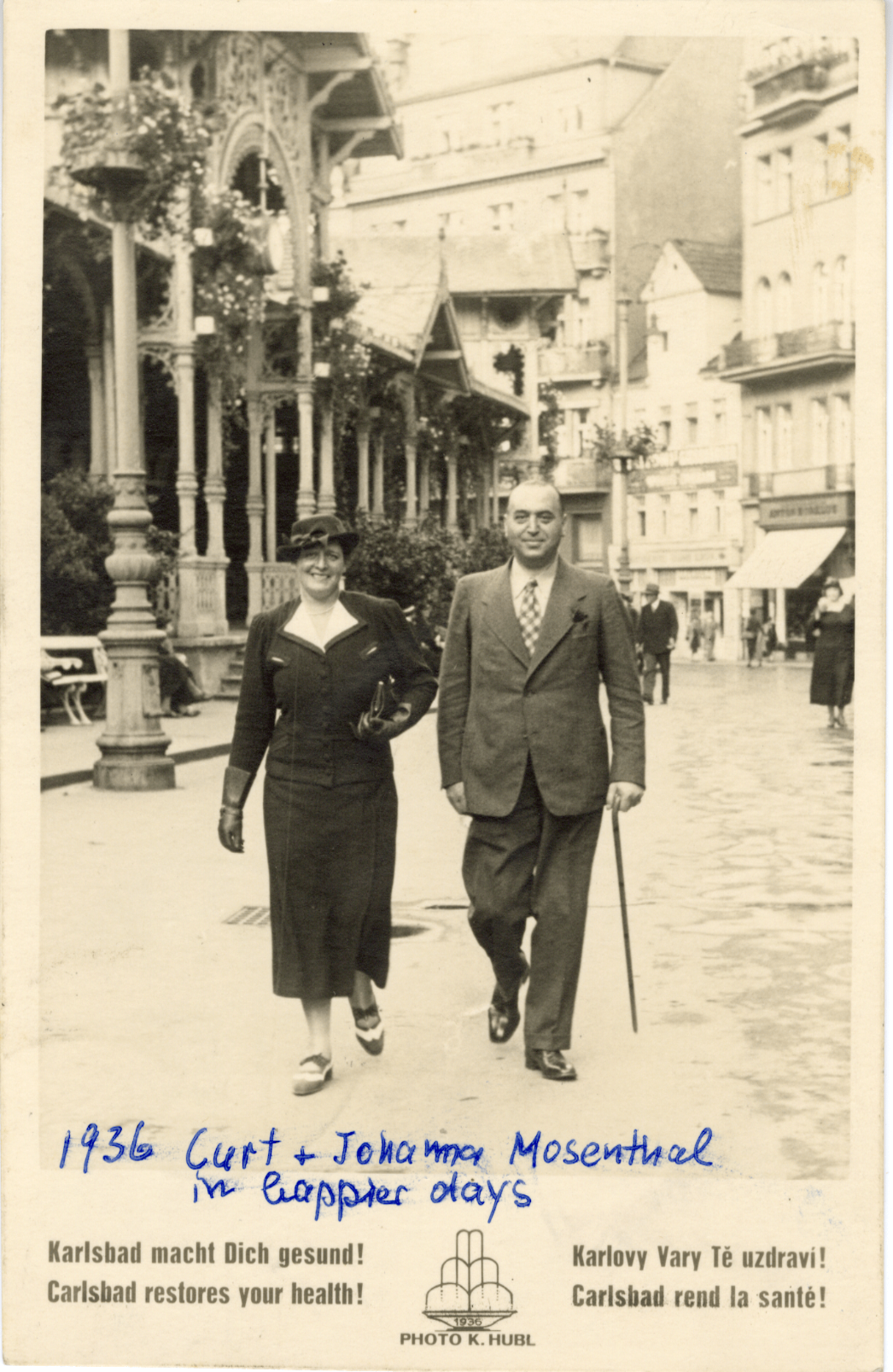
(Tauber Holocaust Library and Archives of the Jewish Family and Children's Services Holocaust Center of San Francisco)
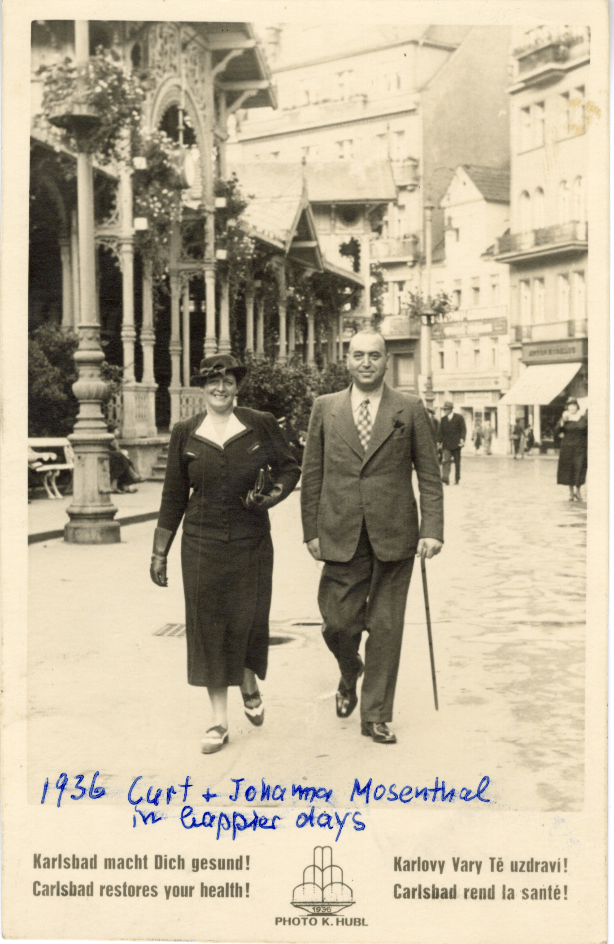
(Tauber Holocaust Library and Archives of the Jewish Family and Children's Services Holocaust Center of San Francisco)
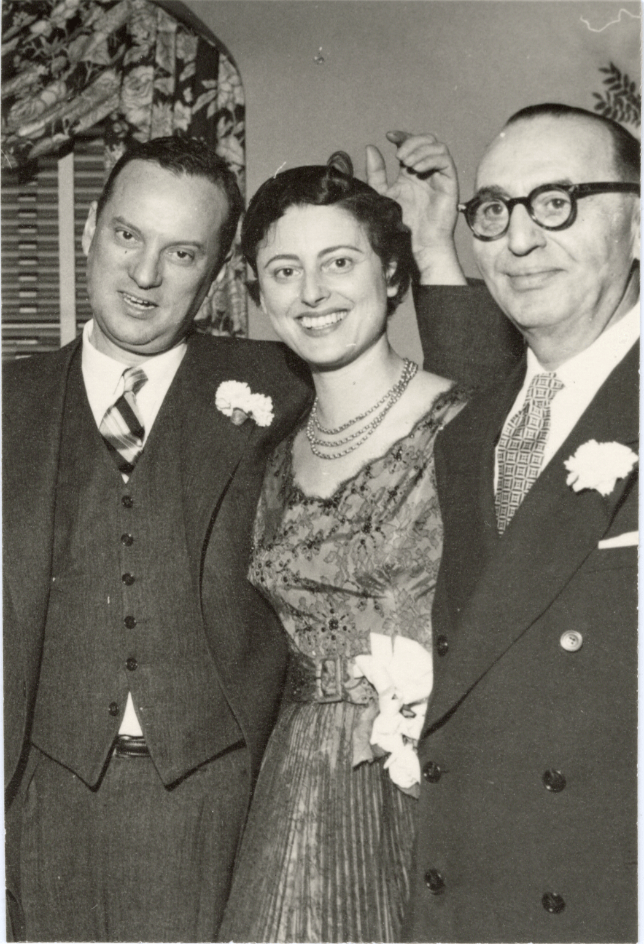
(Tauber Holocaust Library and Archives of the Jewish Family and Children's Services Holocaust Center of San Francisco)
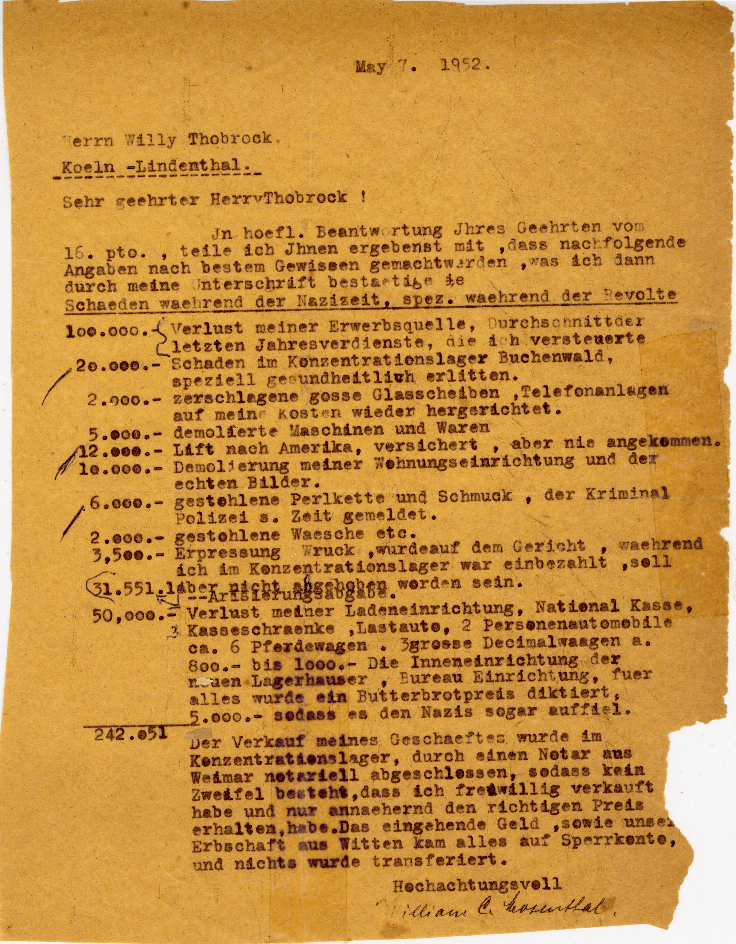
(Tauber Holocaust Library and Archives of the Jewish Family and Children's Services Holocaust Center of San Francisco)
In late August 1939, roughly nine months after his release from Buchenwald, Curt Mosenthal arrived in England with his wife. His sister Erna had been living in the United States since 1938. In a letter written to her on 8 October 1939, he recounted his time in Buchenwald and their escape from Germany:
‘My dearest!
[…]
You write that after the concentr[ation] camp, I should have been able to leave straight away. Anyone who has been through something like that is only too happy to leave straight away!
But after my return, I came down with the flu and had to report to the police every day – as did the others! I had flu-like symptoms for about 4–6 weeks, without bed rest. […]
The worst thing was that despite having held up so well in the concentration camp, afterwards I couldn’t remember anything and could barely string a coherent sentence together. Only now, here in England, am I fully recovering. I’m starting to notice it myself. I wasn’t able to attend any English language courses either! […] Thank G[od], everything has worked out in the end and we are grateful to be in hospitable England.
You cannot imagine the conditions in your former homeland; times are changing too quickly there. Hopefully they will receive their just punishment; what those criminals have done – and are still doing – is beyond description! In the conc[entration] camp. Ten and a half to twelve thousand people were housed in five barracks. The barracks were only about 6 metres apart. About 60 metres long, 11 metres wide, like rabbit hutches, about 80 cm high – you had to crawl in – and the worst part was that the criminals gave us no water, or at least not enough, as it was pumped from W[eimar] and there wasn’t enough. It rained a few times, which was lucky – we could finally drink enough. We didn’t wash for four weeks, sleeping on bare wood, with no straw and no blankets. You know I’m not exaggerating. On top of that, my business was “Aryanised” while I was in the concentration camp. You can imagine how quickly I wanted to get out of there! That I managed it – and am still alive without going mad – can only be described as a miracle. In the end, we became fatalistic. I was reluctant to write this because of my relatives; you never know how a letter like this might be intercepted, but it is the absolute truth!’
(Tauber Holocaust Library and Archives of the Jewish Family and Children's Services Holocaust Center of San Francisco)