Exile in Shanghai
Gustav Beutler had been politically active as a young man. He was involved in the Socialist Workers’ Youth and a Social Democratic sports club. He was born in Schwedt in Brandenburg on 6 March 1906, the son of a tobacconist. Professionally, he followed in his father’s footsteps: he completed an apprenticeship as a cigar maker and opened a tobacco business in Leuna in 1930. He came under pressure due to his involvement with the SPD. Thus, in 1934, Gustav Beutler moved with his wife Annemarie to Merseburg, where their son Martin was born.
SA men arrested Gustav Beutler at the main post office in Merseburg on 10 November 1938. The next day he was taken via the police headquarters in Halle an der Saale to Buchenwald concentration camp. He was finally allowed to leave the camp in early January 1939, on condition that he leave Germany immediately.
But Gustav Beutler stayed. The Gestapo regarded him as politically suspect and arrested him again in early February 1939. This time, they forced him to leave the country. A ship chartered by the Gestapo took the Beutlers and other Jewish families to Shanghai in June 1939. At that time, the Chinese port city had become a refuge for thousands of Jewish refugees from Germany and Austria. In Shanghai, the family lived in poverty for many years. In July 1947, Gustav Beutler returned to Leuna with his son. He wanted to help establish a democratic Germany. He joined the SED and headed a consumer’s cooperative. In February 1948, he married Helga Calm, whom he had met in Shanghai. Gustav Beutler died in Leuna in 1979 at the age of 72.
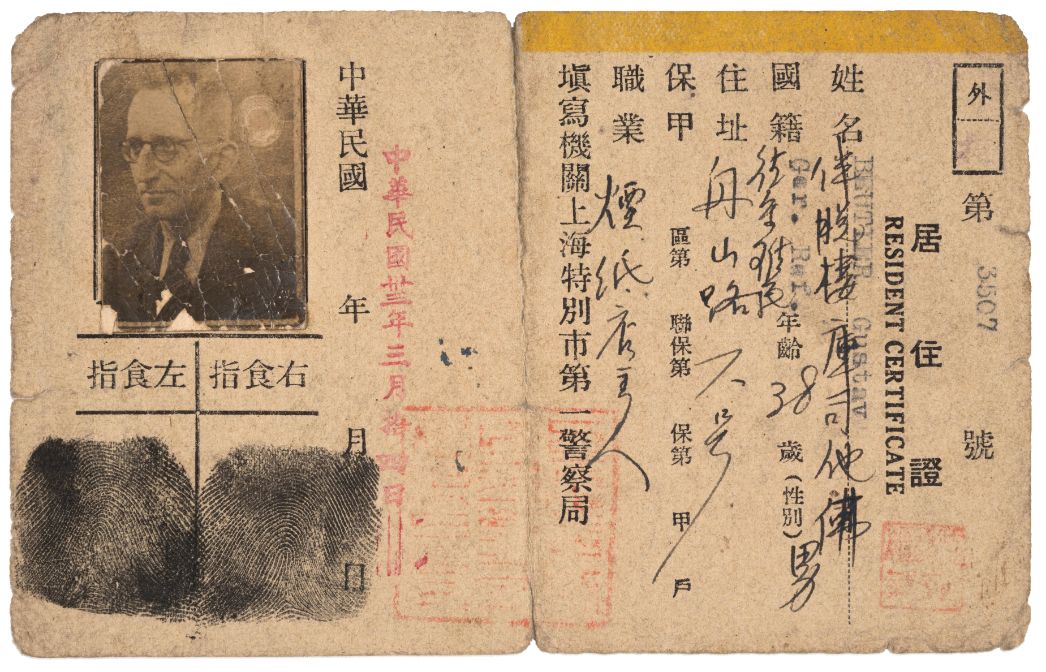
(Jüdisches Museum Berlin, Inv.-Nr.: 2008/20/9, donated by Martin Beutler, photo: Roman März)
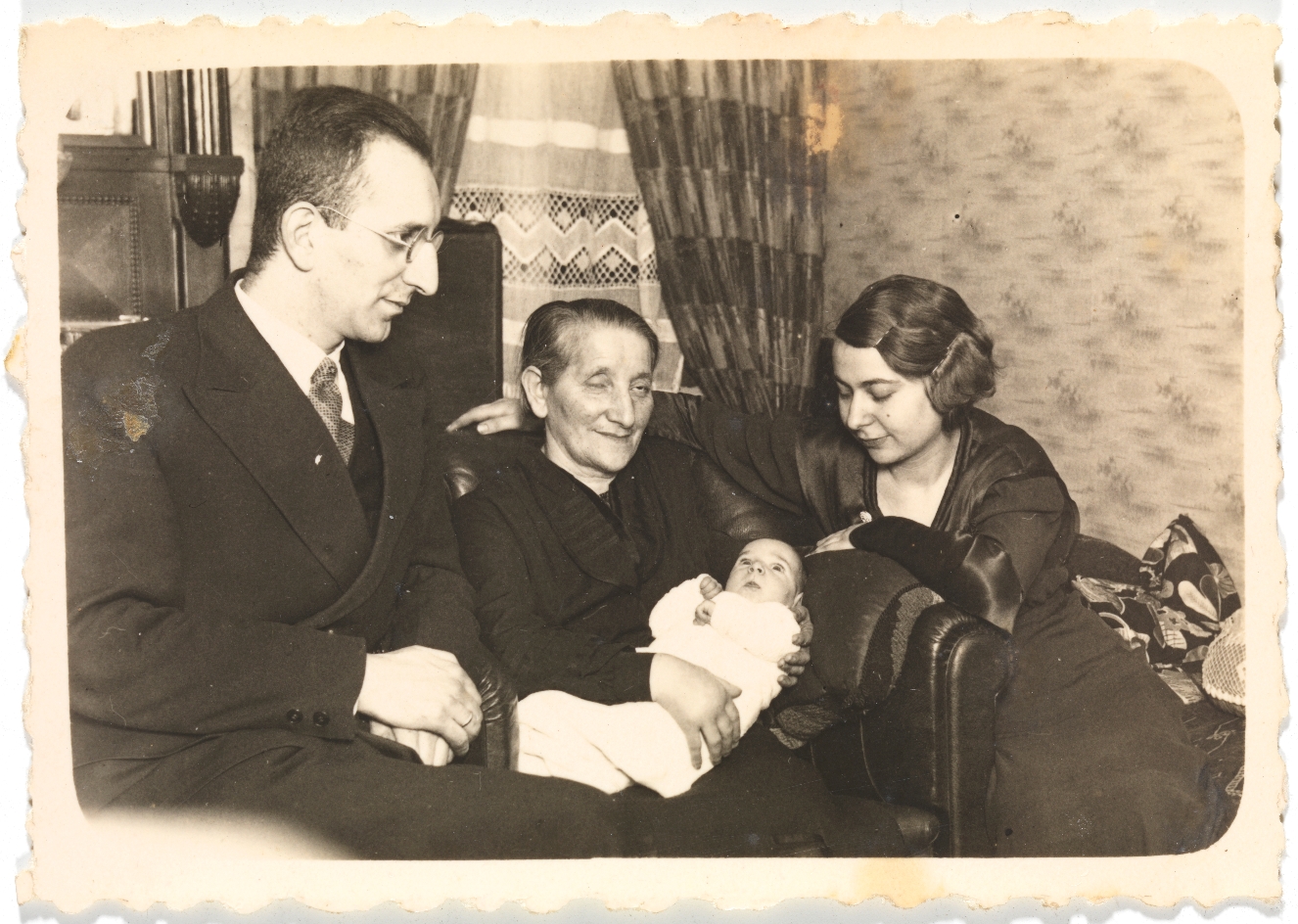
(Jüdisches Museum Berlin, Inv.-Nr.: 2010/85/9, Schenkung von Martin Beutler)
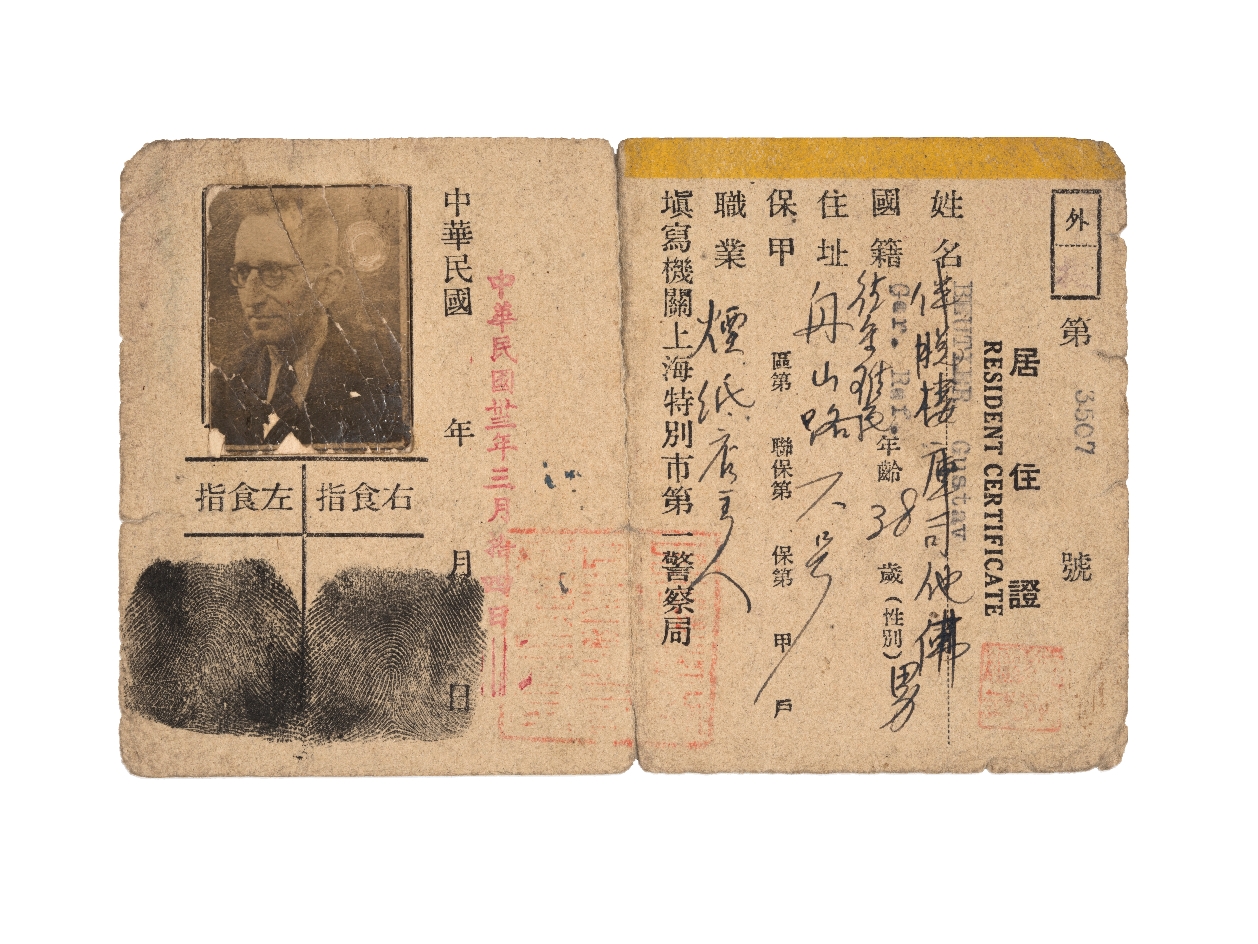
(Jüdisches Museum Berlin, Inv.-Nr.: 2008/20/9, Schenkung von Martin Beutler, Foto: Roman März)
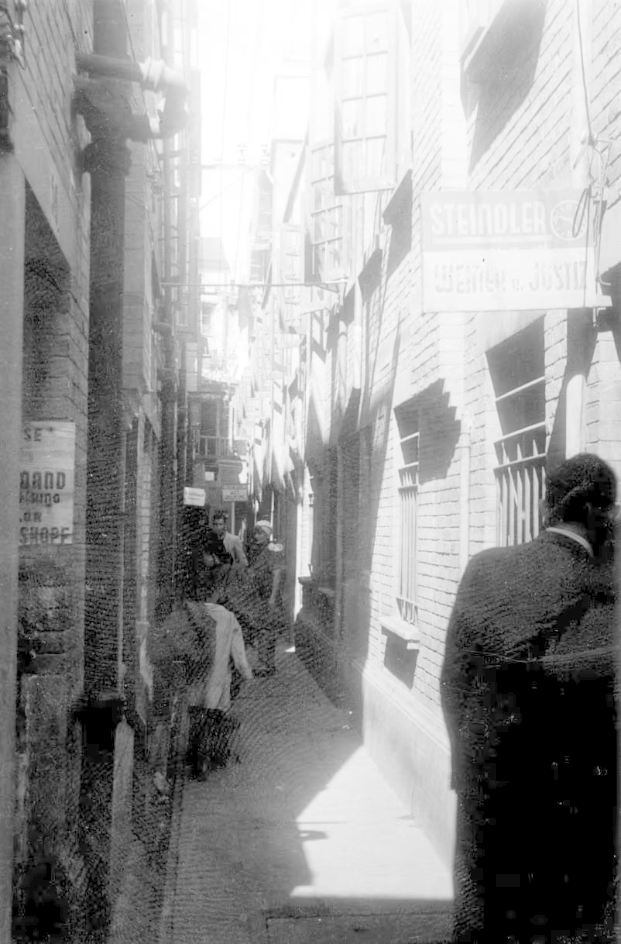
(Yad Vashem, 4648/39, H. P. Witting)
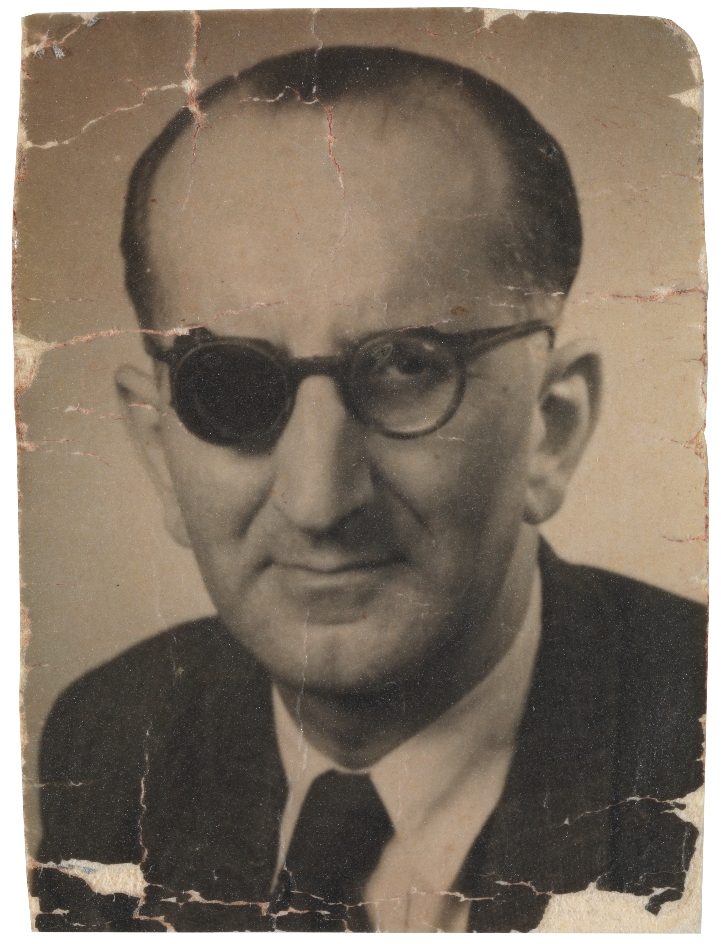
(Jüdisches Museum Berlin, Inv.-Nr.: 2010/85/1, Schenkung von Martin Beutler)
In 1968, Gustav Beutler wrote a short account of his time in Buchenwald concentration camp for the Buchenwald Memorial.
‘By evening, thousands of Jews had been led through the gate onto the roll-call square. Indescribable scenes unfolded. Mostly older men from middle-class backgrounds, who had failed to recognise the true nature of the Nazi regime, shouted that they had fought in the World War and been awarded military honours. These men were chased around the roll-call square by dogs amid mocking laughter and hung by their arms from trees. After the first night, which we were forced to spend standing up, we had to sit upright for days on end, from morning till night, on the damp roll-call square and were not allowed to relieve ourselves, so that many people walked about in their own excrement for weeks on end. As a particular form of humiliation, the SS thugs forced several prisoners to slurp cabbage soup together from a tin bowl without spoons. During these ‘meals’, the guards would walk around, singling out certain prisoners […].
On 7 January 1939, I was led to the political section outside the camp, and forced to line up with other comrades in the corridor. A senior SS officer in patent leather boots paced back and forth in front of the line and spouted political threats to the effect that we would be released on condition that we leave Germany immediately. But that their ‘arm’ reached across the whole world, and if we dared to speak of the conditions in the camp, we would be recaptured. As I refused to undertake the proposed journey abroad without my family, I was re-arrested in Merseburg on 1 February 1939 and taken to Halle for investigation into illegal political activity. Later (in April 1939), the Gestapo took my family and me to Hamburg and onto the notorious Gestapo ship, and sent us to Shanghai, which was occupied by Japan, an Axis power.’
(Gedenkstätte Buchenwald)