
Transcript
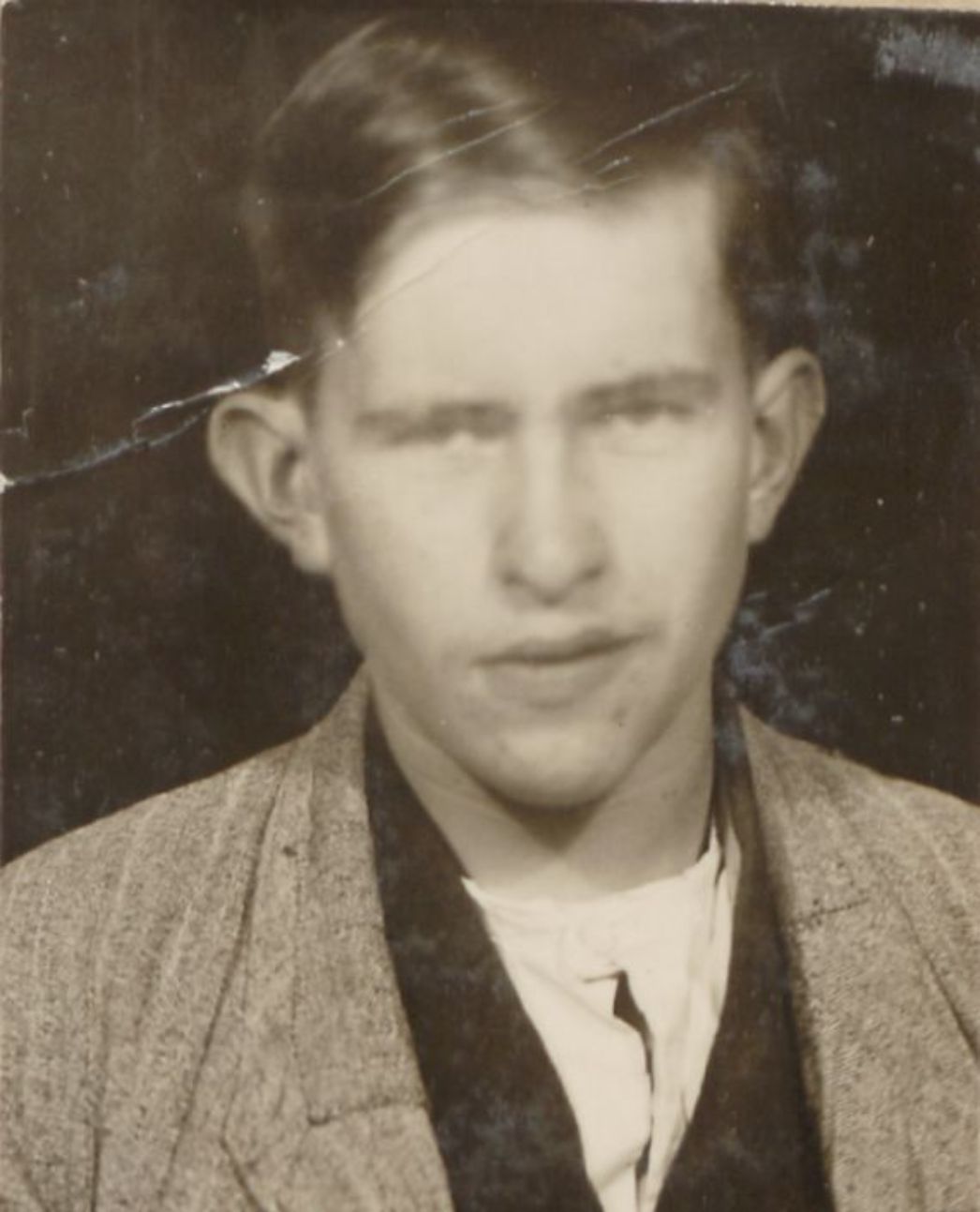
Narrator “Taken from the police to the concentration camp,” noted the administration of the Waldheim Sanatorium in Saxony in Rudolf Schleif’s medical record in late 1943. The Leipzig Criminal Police had picked up the 25-year-old shortly before. On December 30, the SS registered Rudolf Schleif as a new prisoner at Buchenwald. He was classified as “asocial” and therefore wore a black triangle on his clothing.
By this point, Rudolf Schleif had already spent most of his life in reform schools or sanatoriums. His family circumstances were difficult. Until the age of eight, he lives with his mother and stepfather. As a toddler, Rudolf contracts meningitis, the effects of which he suffers from thereafter.
Because he frequently skips school and is considered to have behavioral problems, he is sent to a reformatory for the first time at the age of eight. His mother repeatedly tries to have her son returned to her care. However, the authorities refuse, citing the mother’s “inability to raise a child” as their reason.
It wasn’t until 1933—after seven years in various institutions—that Rudolf returned to his mother for a short time. After only six months, however, he was sent back to a home—this time to a ward for the mentally ill. There, he continued attending school and even began an apprenticeship as a locksmith. To the doctors, however, he was still considered unmanageable and incurable.
In 1935, they applied to have him sterilized. In their view, he suffered from “congenital mental deficiency”—this was reason enough for them to deprive Rudolf of any chance of ever starting a family. In early 1936, he was forcibly sterilized.
After reaching adulthood, Rudolf Schleif remained in various institutions. He attempted to escape several times but was recaptured each time. After serving a prison sentence for theft, he was finally sent to Waldheim in 1943. There he was to remain in “permanent custody”—according to the ruling of the judges at the Leipzig Regional Court.
That same year, however, an agreement was reached between the Reich Ministry of Justice and SS Chief Himmler: Inmates of sanatoriums and nursing homes who were deemed unfit for rehabilitation but capable of work were to be transferred to concentration camps for forced labor. The director of the Waldheim institution willingly reported Rudolf Schleif, along with other patients, to the SS.
Rudolf’s stay in Buchenwald is brief. After about three weeks, in January 1944, he is sent on a mass transport to the notorious Dora satellite camp. There, under devastating conditions, he is forced to work on underground construction sites. After less than ten weeks, he is completely emaciated.
When the SS assembled a transport of sick and dying prisoners in early April 1944, Rudolf Schleif’s name was on the list. Along with over 900 other prisoners who were no longer fit for work, he was taken to the Bergen-Belsen concentration camp. There, the SS largely left the men to fend for themselves. Most of them died within a short time. Rudolf Schleif died on April 18, 1944, in a barracks at the Bergen-Belsen concentration camp.