Transcript
Narrator Rudolf Böhmer is only 15 years old when the SS registers him as a “new arrival” at Buchenwald concentration camp in early August 1944. He has just arrived from Auschwitz-Birkenau along with over 900 other prisoners. They are the survivors of the so-called Gypsy family camp in Birkenau, which the SS had disbanded shortly before. Most of their relatives had been murdered in the gas chambers. The men and boys—all of them Sinti and Roma—were still alive because they were deemed fit for labor.
Unlike the others, Rudolf Böhmer had been in Birkenau for only a relatively short time—just over two months. And in general, his life story differed from that of most of his fellow prisoners.
Since 1934, Rudolf has lived in poverty with his stepfather, his mother, and his three sisters in Quedlinburg in the Harz Mountains. Because they are Sinti, the family is subjected to racial discrimination.
Moreover, Rudolf is a source of worry for his parents: he often skips school and commits petty theft. At the age of eleven, he is therefore sent to a Catholic reform school in the summer of 1940—the Raphaelsheim in Heiligenstadt. He spends the next few years there.
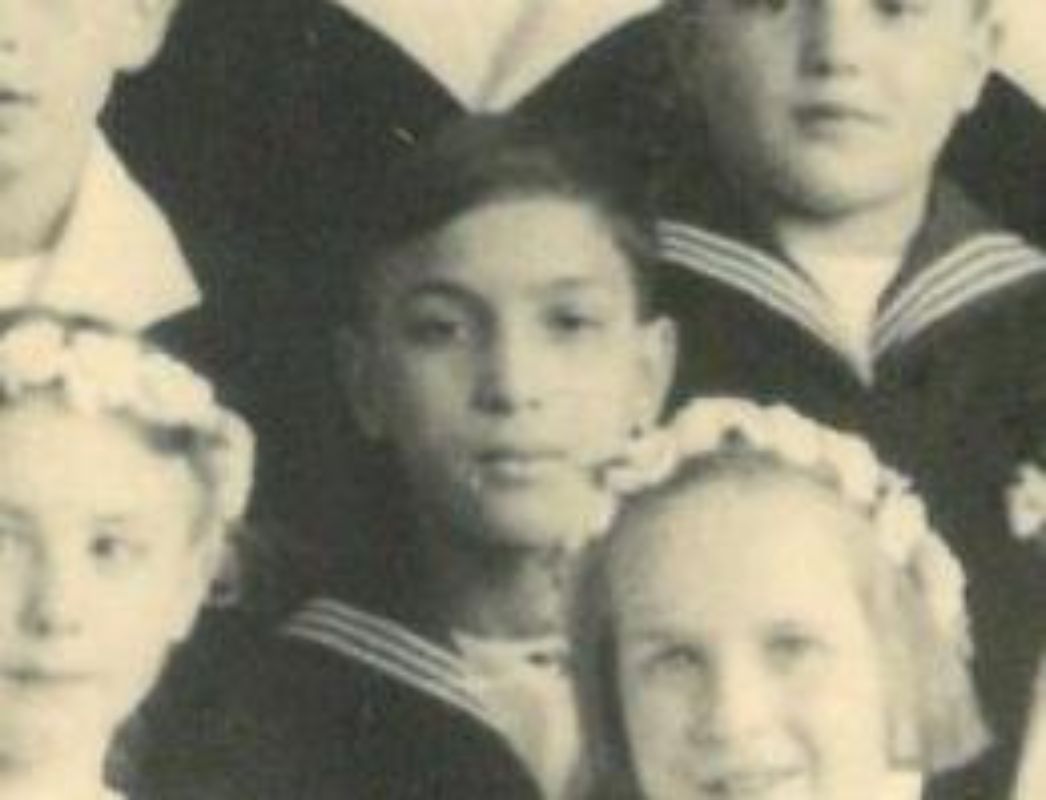
At the home, his academic performance improves; a year later, he also celebrates his First Holy Communion there. He shows a particular interest in agriculture, as noted in one of his report cards.
While Rudolf is working toward his high school diploma at the reform school, his family falls victim to a nationwide campaign against Sinti and Roma. In March 1943, the criminal police deport his parents and sisters to Auschwitz-Birkenau, to the “Gypsy family camp” that had been established shortly before.
Rudolf initially escapes this fate. Since he is at the reformatory, he is simply overlooked. It is not until nearly a year later that he comes to the attention of the authorities. The police are now systematically searching reformatories for young Sinti and Roma as well. Rudolf, too, is no longer safe.
Officially, he is still a so-called reformatory inmate at this point. However, he no longer lives at the reformatory but on a farm near Heiligenstadt. The home’s administration had placed him there as a laborer. But this cannot save him.
At the end of May 1944, officers from the Erfurt Criminal Investigation Department pick him up at his workplace; a few days later—and over a year after his family—Rudolf is also deported to Auschwitz-Birkenau. When he arrives there, he learns that the SS has already murdered his family.
When the “family camp” is dissolved, Rudolf is placed on the list for the Buchenwald transport. Although he is considered fit for work, the SS in Buchenwald has no use for him. A few weeks later, they send him back to Birkenau along with 199 other young Sinti and Roma.
The SS murdered most of the boys upon their arrival. Only a few were lucky enough to survive. Rudolf was among them.
Amid the chaos of the camp’s evacuation, he was sent to the Flossenbürg concentration camp in early 1945. A few months after the war ended, he returned to the Raphaelsheim. However, he was only passing through. He wanted to go to Lower Saxony, where relatives lived.
The ongoing discrimination against Sinti and Roma makes it difficult for him to build a stable life in the years that follow. He dies before he even turns 40.