
Transcript
Narrator November 1944. Shortly after graduating from high school, Rosa Deutsch is ordered to report to a brick factory on the outskirts of her hometown, Budapest. From there, she is forced, along with thousands of other Jews, to undertake a four-week march on foot to the German-Hungarian border. In early December 1944, she is deported to the Ravensbrück concentration camp, where she is forced to spend the next few weeks in a tent. A month later, the SS transfers her, along with 700 Hungarian Jewish women, to the Buchenwald satellite camp in Penig, after representatives from the Max Gehrt Works selected the women and girls during a roll call at Ravensbrück. Rosa Deutsch recalls:
Rosa Deutsch “After five horrific weeks in Ravensbrück, several work detail were selected. So, after a long journey, we arrived at the Penig labor camp. The living conditions were catastrophic. There was hardly anything to eat. We had to walk three kilometers every day to the factory in Penig and back after an 8-hour workday, and on top of that, there was a daily roll call. Many of us soon fell ill with gastrointestinal infections, pneumonia, and typhus. We suffered from the cold, hunger, lice, and the brutality of the female SS guards.”
Narrator The women are forced to work in three shifts in a factory manufacturing aircraft parts. Hygiene conditions in the barracks camp itself are appalling. There is no way to wash. The women wear the thin prison uniforms from Ravensbrück all the time; there are no spare clothes. Food supplies are inadequate. Even the SS commandant reported to Buchenwald in March 1945 that the number of acute illnesses was rising dramatically.
Rosa, too, fell critically ill and was placed in the camp’s so-called “cripple block.” The SS sent women there who could no longer work and whose health condition offered no hope of recovery. They were left to die.
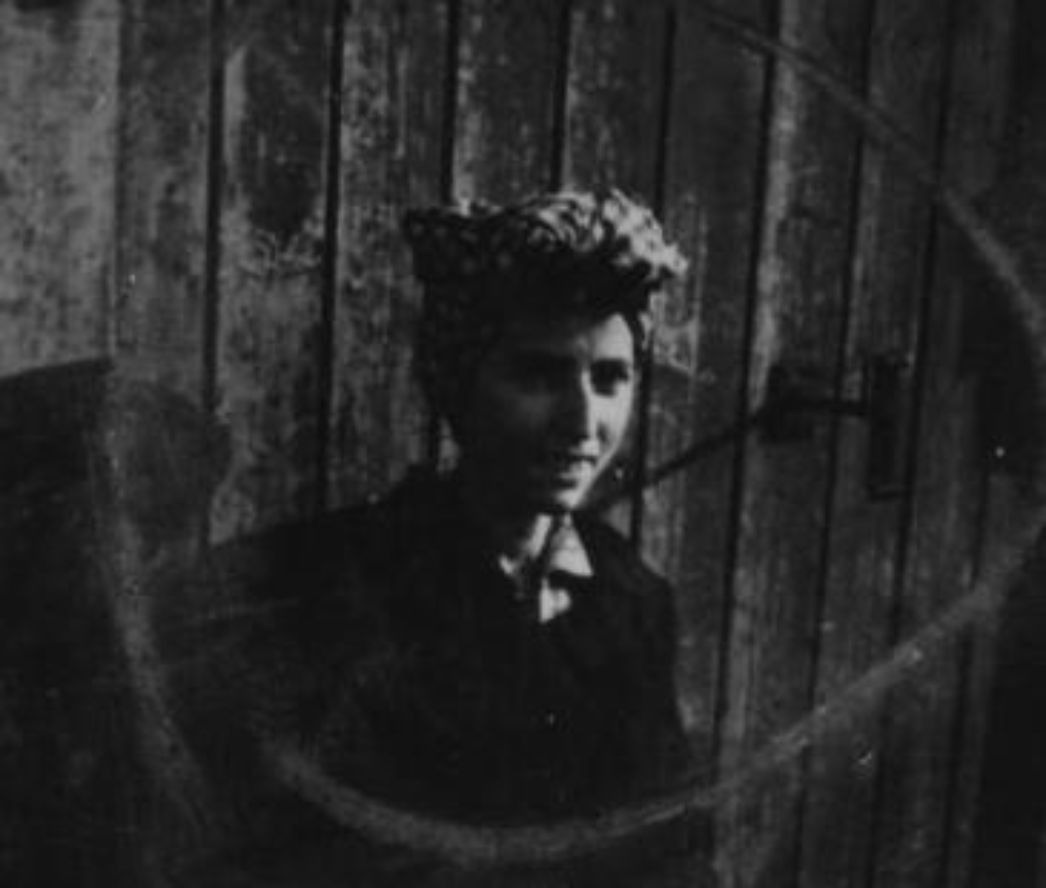
When the SS cleared the camp, these women were left behind. Two days later, American soldiers liberated the camp. They provided medical care to the survivors and photographed them. Decades later, Rosa Deutsch described this situation:
Rosa Deutsch “I had remained in the camp with many others from the ‘cripple block’ and sick women in the infirmary who were too weak to walk—about 80 women. Two days later, the Americans arrived. That very day, an 18-year-old girl died in the infirmary. People from the U.S. Army Medical Corps came to us. And a reporter from the Army newspaper ‘Life.’ He spoke with us, took photos, and arranged for us to be admitted to the small hospital in Altenburg-Leinawald. In that infirmary, women continued to die of tuberculosis and heart disease.”
Narrator Rosa requires several weeks of care. At the end of July 1945, she is able to return to her parents in Budapest. Twenty years later, she contacts the American military journalist David E. Sherman. She asks him to send her the photographs he took during the liberation of the Penig satellite camp. In 2001, Rosa Deutsch donates the 74 photographs to the Buchenwald Memorial.