Transcript
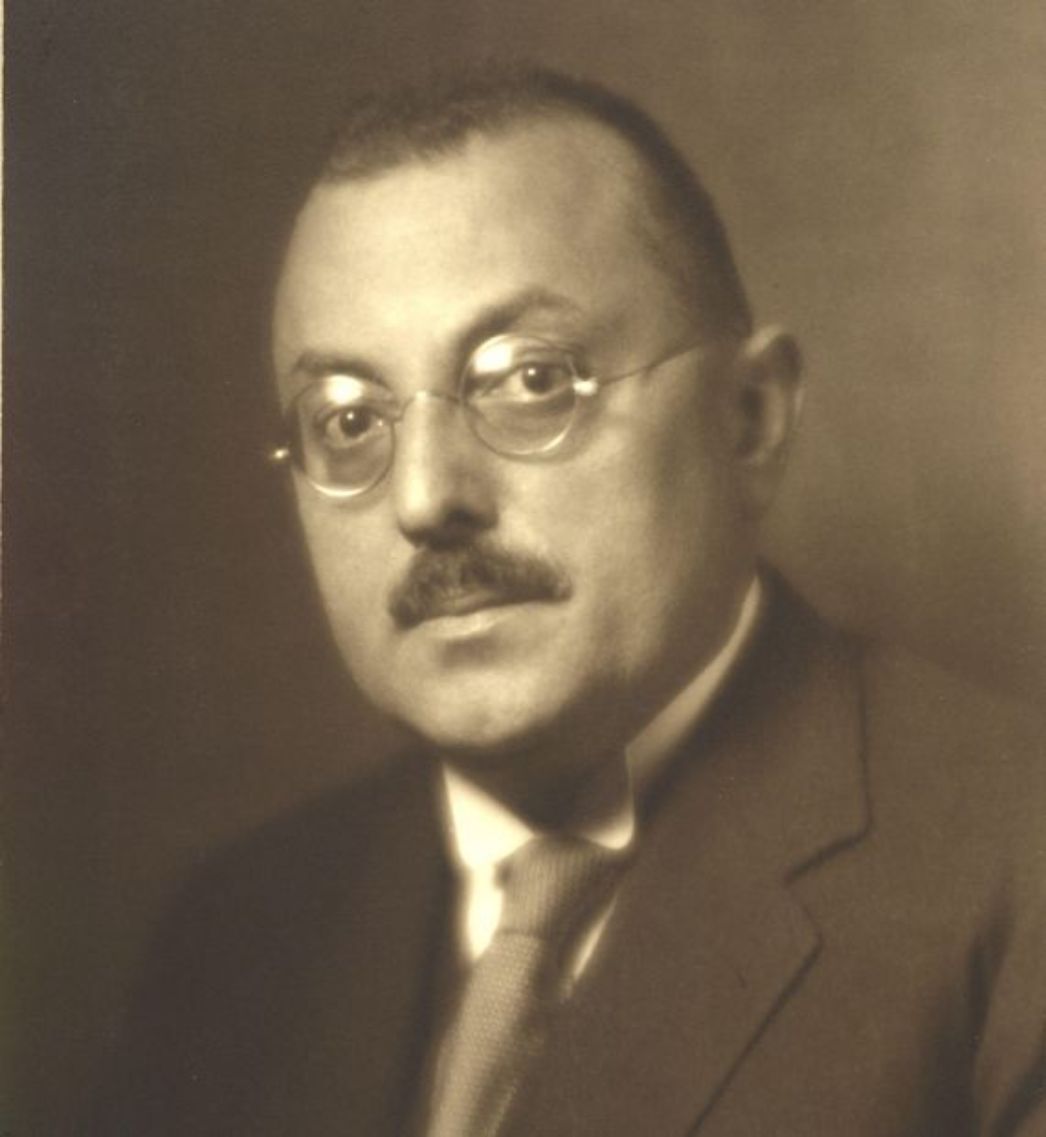
Narrator Vienna, March 1938. The evening train to Brno is waiting at Vienna’s Nordbahnhof station. Robert Danneberg boards the crowded train with his two children and two suitcases. He must leave Vienna and attempts to flee via Czechoslovakia. Many others had managed to escape in this way shortly before. That night, however, Czech border guards turn the train back. Back in Vienna, Danneberg, as one of Austria’s leading Social Democrats, is immediately arrested. The children are allowed to go home. Three more journeys follow in Danneberg’s life, to three concentration camps; he dies in the last one in 1942.
The events in Vienna during these spring days of 1938 are as unusual as the weather. The sun is blazing as if it were summer; it has barely rained for weeks. Austria has lost its independence and is carrying out the so-called “Anschluss” to the German Reich. Danneberg is among those who are desperately striving for Austria’s independence. Only when this fails does he attempt the ill-fated escape.
His interest in politics became apparent at an early age. At 18, he began corresponding with the philosopher and politician Karl Kautsky, who was more than 30 years his senior. They discussed issues of social philosophy and political systems. Danneberg played a formative role in the Social Democratic-led “Red Vienna.” Almost all of the fundamental documents and achievements of this period bear his signature: Vienna became an independent federal state and adopted a democratic municipal constitution in 1920. All of this remains in effect today. Social housing programs were also implemented in Vienna, as well as continuing education programs for workers. Fellow prisoner Ernst Federn recalls conversations with Danneberg in Buchenwald:
Ernst Federn “I cannot help but quote a sentence of his that has remained indelibly etched in my memory over these 30 years [since my liberation]. Everyone is free to doubt this. Danneberg said: ‘You know, Ernstl, the way it was is that Otto Bauer [who was also a Social Democrat] gave the revolutionary speeches, and I had to negotiate.’”
Narrator Danneberg was deported to Dachau on April 1, 1938, in the so-called “Prominent Transport,” and six months later to Buchenwald. At first, he had to work in the latrine detail. With his bare hands and jam jars, he transferred feces from a latrine into sewers. Six months later, fellow prisoners managed to get him lighter work: for three years, he became a stocking darner.
During his imprisonment in Buchenwald, his wife Gertrud, with the support of some party colleagues, fought tirelessly for his release. What other relatives managed to achieve was prevented in Danneberg’s case by SS Reichsführer Himmler. Although Danneberg left Buchenwald, he was not set free. The New York Journal of the Austrian Social Democrats would later report on Danneberg:
Austrian Labor Information “And the moment we had hoped for, the moment when [he] would leave the camp [Buchenwald], was in reality a terrible moment, because [he] faced something even more terrible.”
Narrator Robert Danneberg is registered as a Jew in Buchenwald. When, on October 17, 1942, a so-called “transport” carries people from Buchenwald toward Auschwitz, he is among them. Buchenwald is to be made “free of Jews.” It is a dark night when the train arrives in Auschwitz. An eerie silence envelops the prisoners as they disembark. He survives the subsequent selection at Auschwitz; he is classified as fit for work. But about eight weeks later, in mid-December 1942, Robert Danneberg dies.