
Transcript
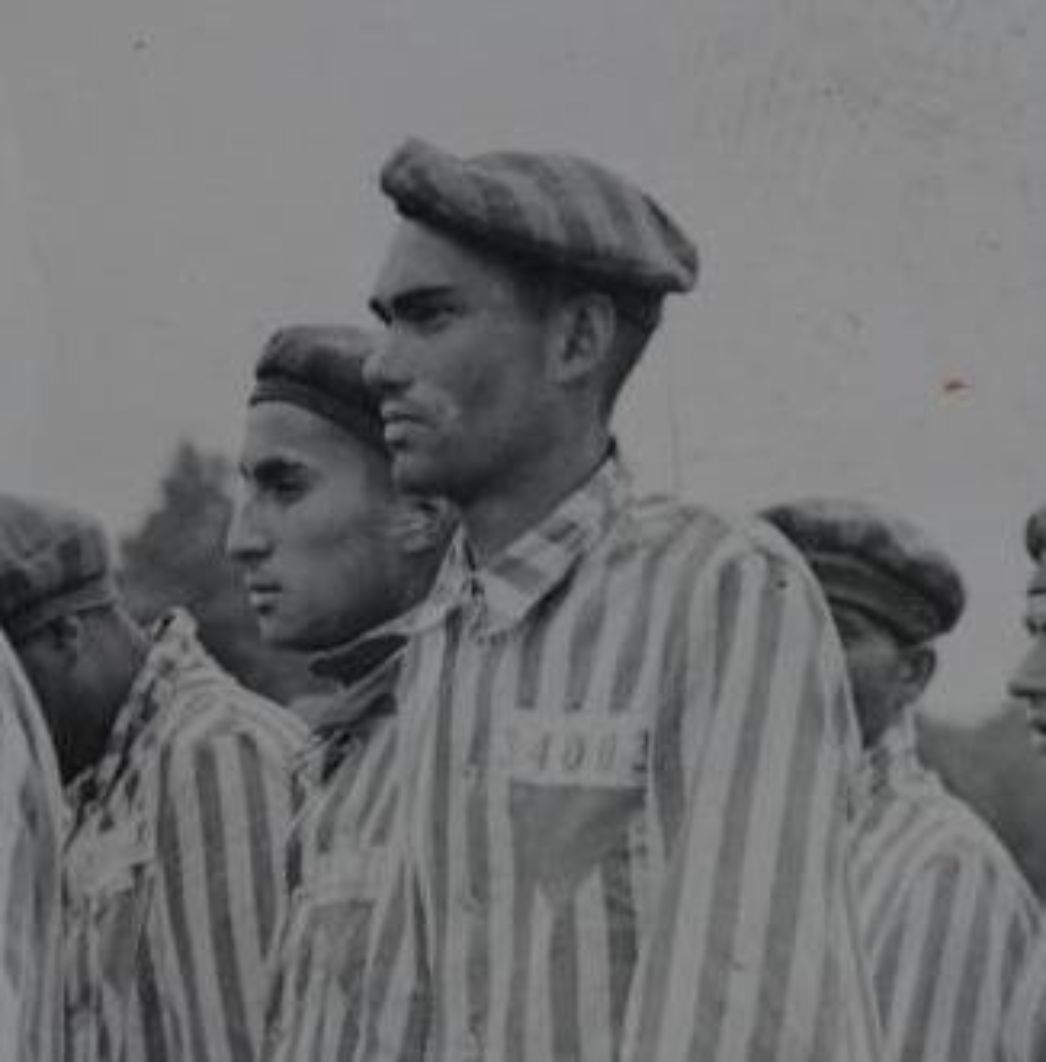
Narrator 1 The concentration camp has distinguished visitors. The SS lines up a group of prisoners for roll call; an SS photographer is present. It is the fall of 1939, shortly after the war began. The prisoners are wearing striped uniforms, like almost everyone in Buchenwald. But the numbers on their jackets are prisoner numbers from the Dachau concentration camp. Clearly legible on the front: 34003. This is Paul Baranyai, 22 years old, married, Catholic, residing in Steingraben in the Austrian province of Burgenland. His clothing card reads “Gypsy.” He and those in front of and beside him are Burgenland Roma from Block 14.
Narrator 2 Roma have lived in Burgenland, a region traditionally characterized by small-scale farming, for generations. They have found niche occupations: as scissors grinders and occasional blacksmiths, basket weavers, broom and brush makers, as merchants, professional musicians, or seasonal workers in agriculture. Their discrimination and persecution began long before Austria’s so-called “Anschluss” to Nazi Germany. But with this, persecution became a matter of state. A memorandum on the “Gypsy Question” was issued; bans and police measures targeted Roma families and plunged them into extreme hardship. At the end of June 1939, the Austrian police arrested and deported entire families, sending them to concentration camps.
Narrator 1 The Romani women are sent to the Ravensbrück women’s concentration camp, while 600 men are sent via the Dachau concentration camp to Buchenwald. There, the SS assigns them to wooden barracks 14 and 15. Wearing only their thin prison uniforms, they are forced to work outdoors even in winter.
Many quickly reach the end of their strength. Alfred Hönemann, a political prisoner, is their block elder. He recalls:
Hönemann “The emaciated prisoners could not find the strength to keep their bodies moving. They stood at the end of the barracks as if nailed to the spot, with their coat collars turned up, their caps pulled far over their ears, their hands in their pockets up to their elbows, their mouths hanging down, like mummies. Every now and then an SS squad leader would walk past these figures and yell at them, but they no longer reacted.”
Narrator 1 Paul Baranyai is one of those who did not survive the harsh winter of 1939–40. He died of pneumonia. His personal effects—an apron, pants, shirt, shoes, and cap—were sent by the SS to the Güssing gendarmerie post to be forwarded to his wife, Rosalie. Whether she ever received them is unknown.
Narrator 2 The Roma from Burgenland who survive the first winter are soon transferred by the SS to the Mauthausen concentration camp. Supposedly, the intention is to train them as stonemasons there. But many perished in misery after only a short time. Only a few of their family members survived deportation and mass murder. Today, a memorial at the Buchenwald Memorial commemorates them; it stands on the foundations of Block 14, the barracks where Paul Baranyai lived.