
Transcript
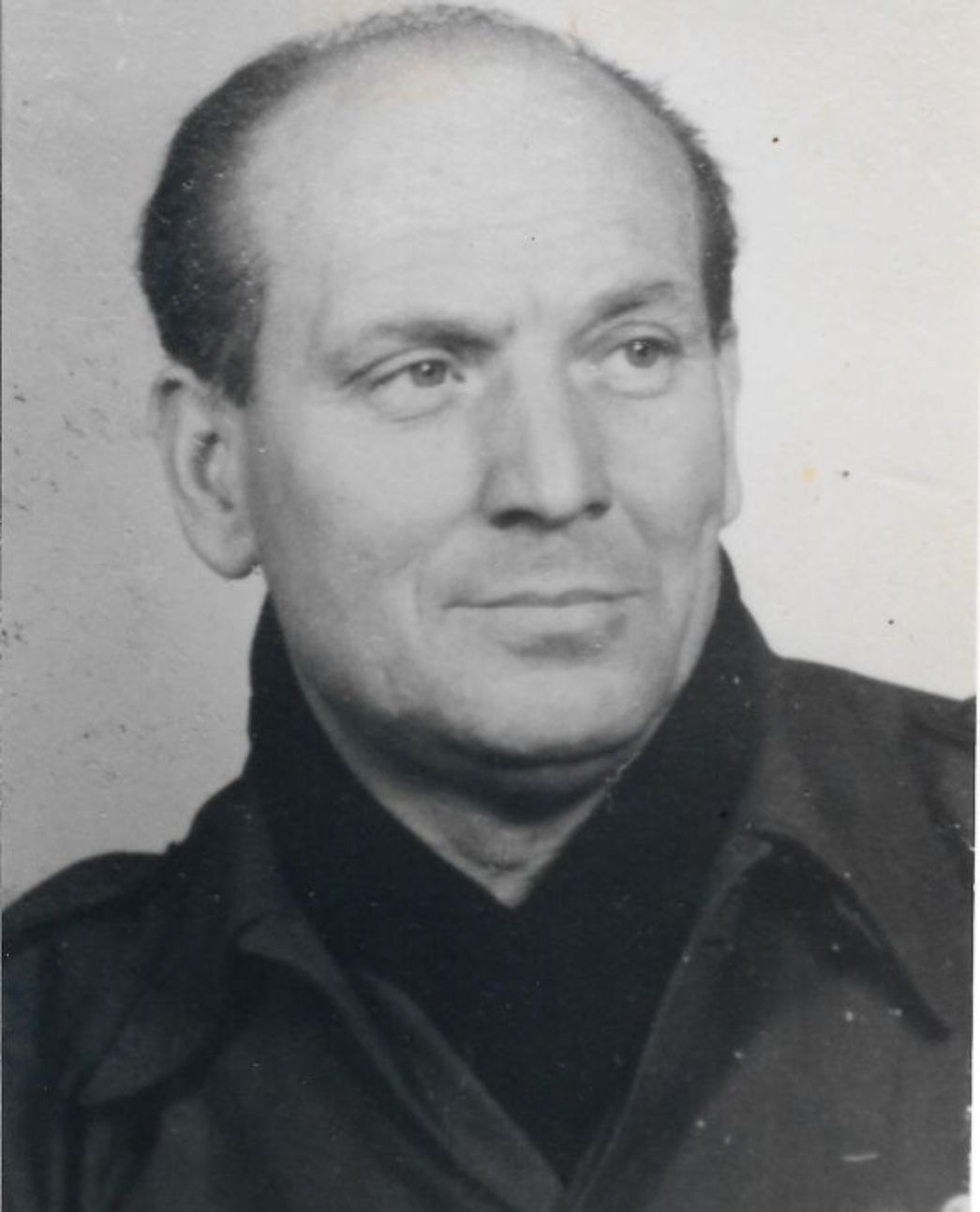
Narrator “Let’s go! The march to freedom begins!” With these words—as the Latvian Jew Isaac Kram recalls—Otto Herrmann tried to cheer up his fellow prisoners on the evening of April 1, 1945. Herrmann was the camp elder at the Niederorschel concentration camp satellite camp, which was to be hastily evacuated before the Americans arrived.
Here in the Eichsfeld region, Junkers AG had set up a branch plant in September 1944. Forced laborers and concentration camp prisoners—the vast majority of them Jews—were forced to manufacture wings and landing gear for fighter planes.
Otto Herrmann, a political prisoner in Buchenwald since 1939, is appointed camp elder in Niederorschel from the very beginning. Isaac Kram describes him as “strong, short, and stocky, built like a wrestler.” And Herrmann had indeed learned to fight, especially during the political conflicts of the 1920s and 1930s: in 1921, the trained electrician joined the KPD; he was also involved in the Central German Uprising, an armed workers’ revolt, following the suppression of which he was imprisoned for several months—it would not be his only prior conviction for political activity. In the Proletarian Hundreds and later in the Red Front Fighters’ League, the KPD’s paramilitary force, he fought against far-right movements from the early 1920s onward. When war broke out in 1939, the Gestapo immediately arrested him.
Among the communists at Buchenwald concentration camp, Herrmann is nevertheless something of an outsider. It may be that his past membership in an anarchist-oriented labor movement plays a role.
As camp elder in Niederorschel, Herrmann stands up for his fellow prisoners—even if this means confronting the SS guards. “The almost bearable conditions in our camp,” says Isaac Kram, “we probably owed in large part to our ‘Kapo’ Otto.” For many of the prisoners, especially the Jewish ones, this is a new experience. Herrmann encourages them, advising new arrivals to pose as skilled workers. “Otto treated us with great kindness,” writes Kram: “We all liked him very much.”
Of course, even Otto Herrmann cannot prevent the evacuation of the satellite camp in early April 1945. The SS drives the inmates on foot toward Buchenwald. After six days of marching, they reach the satellite camp in Berlstedt; it has already been evacuated, and Weimar is only a few kilometers away—and yet the SS takes a break from the march, lasting several days. Otto Herrmann is said to have persuaded the SS men to do so.
When the SS allows the march to continue and the column of prisoners reaches its destination on the evening of April 10, the last major evacuation transport has left Buchenwald. The next day, the Americans arrive, and the camp is liberated.
Starting in August 1945, Otto Herrmann served as a senior government official in the provincial administration of Saxony-Anhalt and as secretary to the Minister of the Interior. However, in 1948 he resigned from these high-ranking positions and also left the SED because he rejected the party’s Stalinist course. He worked as a janitor until his retirement.
Many years after his death, he received belated recognition: In 2004, the Israeli memorial Yad Vashem honored Otto Herrmann as a “Righteous Among the Nations,” Israel’s highest award for people who helped Jews during the Holocaust.