
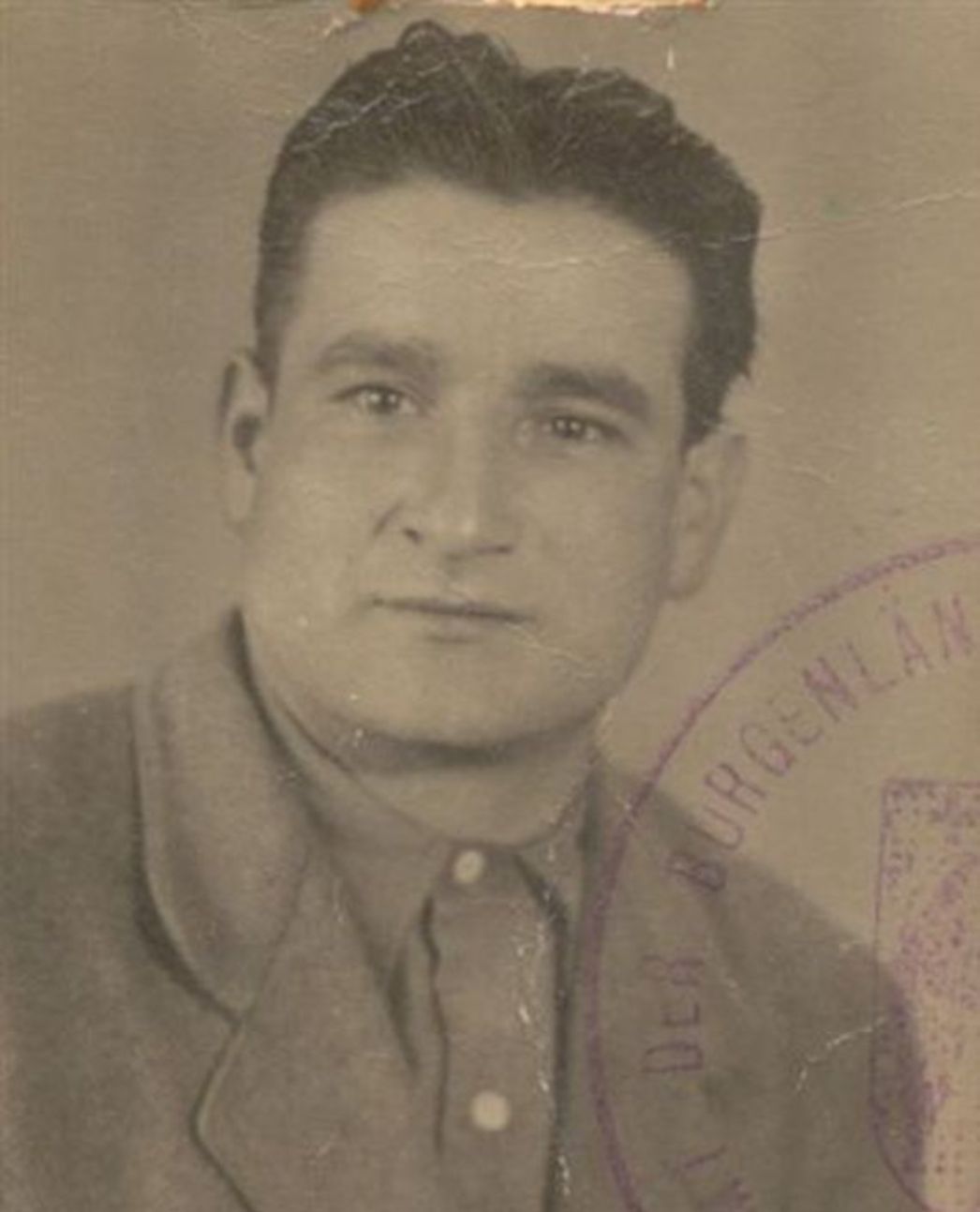
Transcript
Narrator Oberwart, Austria, June 26, 1939, 4 a.m.: Police and the SS have surrounded the settlement in Burgenland. It is still dark on this Monday morning. The residents are roused from their sleep. Among them is 17-year-old Michael Horvath:
On this day, the first mass deportation in Burgenland takes place. In many towns, entire Roma families are arrested. They have lived there for generations; now they are to be removed. Men, women, and young people are indiscriminately deported to concentration camps.
Flashback: Michael Horvath is born the third of seven children. His mother works as a laundress, his father at a sawmill; yet the family is poor. Despite everything, Michael Horvath also has fond memories of his childhood:
Horvath “As children, we played in a pack in the courtyard. We sang, played pranks, and didn’t look at the clock.”
Narrator He is unable to attend school regularly. Even as an 8- and 9-year-old, he helps with the harvest on a farm. Later, he works as a day laborer. Economic hardship and unemployment are widespread; discrimination is the order of the day. After Austria’s so-called “Anschluss” to the German Reich, the atmosphere toward the Roma became even more hostile; discrimination against them was now also organized by the state. Men were forced to perform hard labor in quarries and on road construction sites. Horvath was among them. Until the day of his arrest in the summer of 1939:
Horvath “You have to go to the police station.” I said, “Why? We didn’t do anything wrong. We didn’t steal anything. Nothing at all.” “Yes, you’re coming back right now.”
Narrator However, a return is not on the agenda. Trucks are standing by. At first, Michael and his family do not know where they are going.
Horvath “We had to sit there and couldn’t see where we were going. Then we spent the night in Feldbach. In the afternoon, we were put into train cars at the station [there] and rode all night to Dachau.”
Narrator 440 of the women and girls are deported to the Ravensbrück women’s concentration camp; the men and boys—more than 600—are sent via the Dachau concentration camp to Buchenwald. From the Horvath extended family alone, over 100 men arrive in Buchenwald at the end of September 1939; they are between 16 and 59 years old. Just as before in Dachau, they are at the mercy of the SS’s whims in Buchenwald as well:
Horvath “Sometimes, depending on their mood, [...] they beat you a lot, sometimes a little. But they beat you every day.”
Narrator Added to this are the working conditions: Come rain or shine, the “Gypsies”—as the SS called the Burgenland Roma—were primarily assigned to hard labor units. One in three did not survive the winter or the first year in Buchenwald. In 1941, the SS sent those who were still alive on to the Mauthausen concentration camp in Austria.
Michael Horvath was sent there in May 1941. In the satellite camps at Gusen and Lungnitz, he was forced to perform hard labor in a quarry and as part of a bomb disposal unit. By sheer luck, Michael Horvath survived the ordeal. When he returned to his hometown of Oberwart two months after liberation, he discovered that most of his family had been murdered.
Horvath “There used to be 360 of us Gypsies here with our children—and only 19 came home! And there were villages where Gypsies lived, and now there isn’t a single one left […] Where are they all? And nobody believes it. When you tell them about it, they say, ‘Ah, that’s just nonsense.’”
Narrator Michael Horvath stays in Oberwart. Anna, a survivor of the Ravensbrück concentration camp, becomes the love of his life. He marries her and becomes the proud father of eight children. However, even after 1945, the lives of the Roma are not free from discrimination. The renewed hostilities reach a tragic climax in 1995. Two of his grandchildren are killed in a bomb attack.