
Transcript
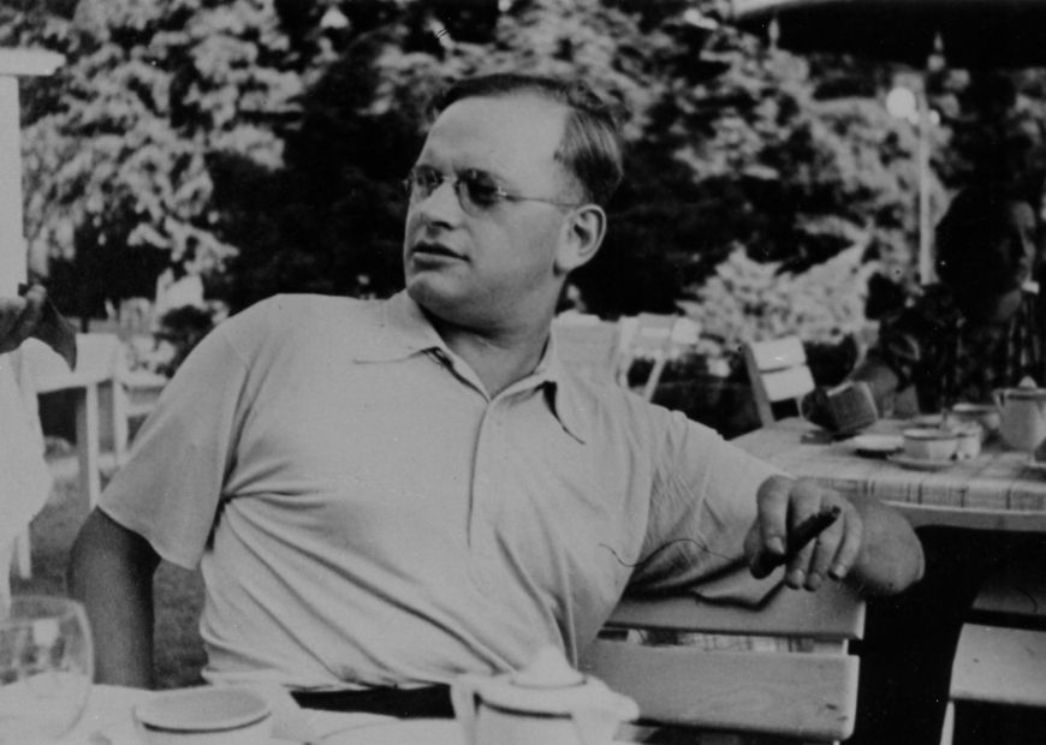
Martin Gauger The loss of my office affects me deeply, even though I am glad that I did not take an unconditional oath of loyalty and obedience to someone who, for his part, is bound by no law or right.
Narrator Martin Gauger refused to take the oath of loyalty to Hitler. It is October 1934, marking the end of his legal career, which had barely begun. Like many Protestant Christians, he had initially placed his hopes in Hitler’s “national government.” But soon the Gestapo shatters the security of his affluent, religious family home. His father, a pastor, is arrested, and his magazine is banned.
An ordered wave of murders within the SA leadership is the deciding factor in Gauger’s refusal. Martin Gauger is dismissed from public service. He begins work on his doctoral dissertation, advises persecuted pastors, and writes expert reports for the opposition movement within the church. The church finally hires him on a permanent basis in 1938. But even there, he remains a thorn in the side. Then, months after the war begins, in the spring of 1940, the draft notice for the Wehrmacht arrives. Suicide seems to him the only way out. In a farewell letter to his brother, he writes:
Martin Gauger I am supposed to serve a war that I reject with every fiber of my being. I do not consider it a war of defense, but a war of aggression. [...] You understand that this is a matter of conscience. [...] But what am I supposed to do? Can I take part in a war that destroys everything I hold dear? I cannot; I cannot participate in the destruction. [...] And once the fog in which we live has cleared, people will ask why only some, and not all, behaved this way.
Narrator His attempt to kill himself fails. Friends hide him and help him reach the Dutch border. He swims across the Rhine and arrives in the Netherlands. It is May 9, 1940, one day before the Germans invade the Netherlands. He continues to flee, aiming for Switzerland, but a military patrol shoots him in the legs. When the Regional Church Council learns of the “Gauger case,” his employment is terminated. Even at his mother’s request, none of the Lutheran bishops intercedes on his behalf. A hospital, the Gestapo prison in Düsseldorf, and the Buchenwald concentration camp are the next stops.
In Buchenwald, the SS placed him on the list for a death transport. Eight weeks after his arrival, Martin Gauger was gassed to death in the gas chamber of the Pirna-Sonnenstein extermination facility. The SS falsified the cause of death. His brother Joachim received the news from SS doctor Hoven:
Waldemar Hoven I am all the more sorry to hear of your brother’s sudden death far from his loved ones, especially since the medical staff did everything they could to preserve his health.