Transcript
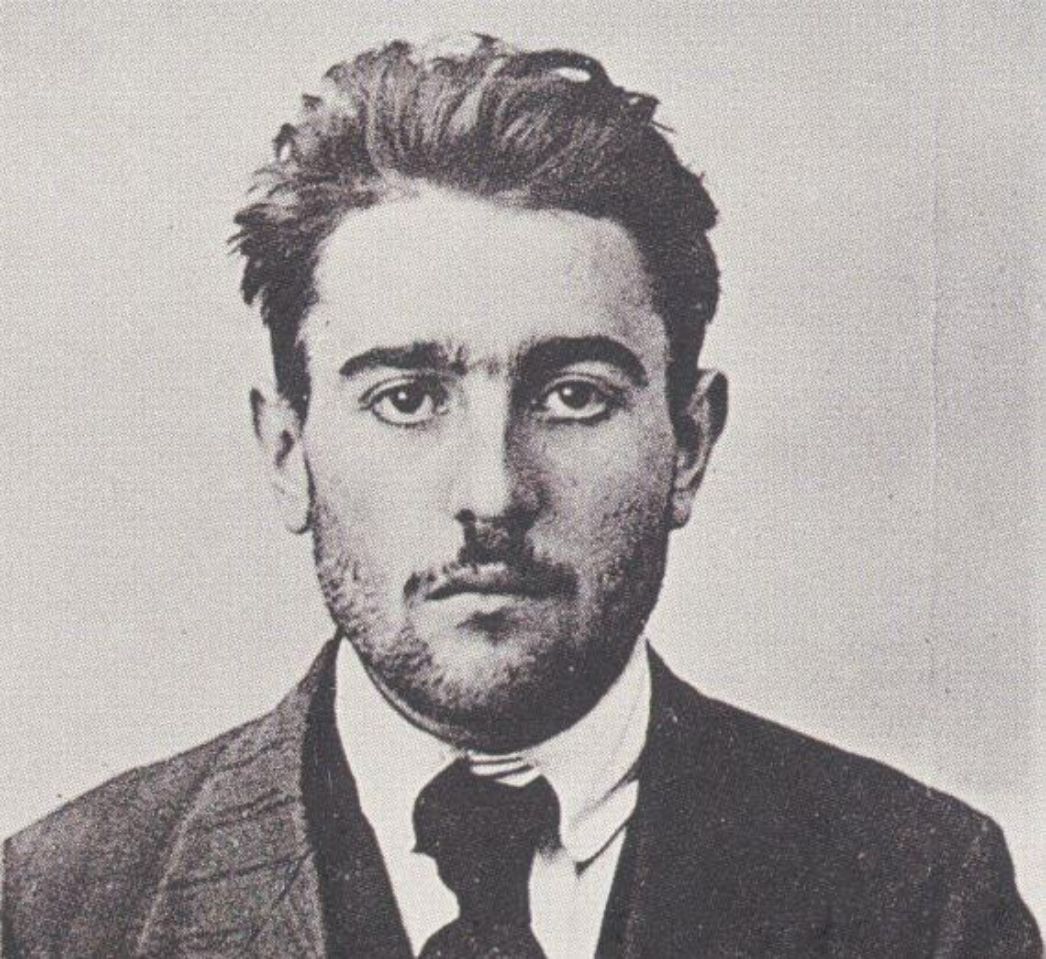
Narrator 1 Bandit leader, terrorist, or revolutionary fighter? Karl Plättner was probably a bit of everything. After the so-called “Central German Uprising” failed in 1921, Plättner and his men began robbing bank branches and factory cash offices. Their motto: the “expropriation of the expropriators”—the expropriation of those who expropriate. Like Robin Hood, they wanted to take from the rich and give to the poor.
Narrator 2 Karl Plättner was born in 1893 as the child of a laborer in Opperode in the Mansfeld region. At the Thale ironworks, he learned the trade of a mold maker. In 1908, he had his first run-in with the law: Plättner was convicted of public insult. After his apprenticeship, he went on a journeyman’s tour and subsequently settled in Hamburg. In 1914, he was drafted into the war. Plättner returned home as a disabled veteran; he could no longer practice his trade.
Narrator 1 Karl Plättner became politically active at an early age. First in the SPD’s youth league, later in a non-partisan youth organization. When that was banned, he went underground. Plättner traveled throughout Germany, attempting to form an anti-militarist youth alliance. He drafted “guiding principles” and advocated for mass strikes as a means of struggle. Later, he joined the KAPD, the Communist Workers’ Party of Germany.
Narrator 2 In the spring of 1921, the government brutally suppressed revolutionary unrest in the Halle-Merseburg area. At the end of this “Central German Uprising,” Karl Plättner and his comrades raided a factory. They seized cash and platinum. But the loot was not distributed to the poor; the gang used it to support their own families. More raids quickly followed. Although they only threatened violence, their loot was substantial. But little by little, the gang fell into the police’s net. In February 1922, Plättner was arrested.
Narrator 1 Plättner saw himself as a revolutionary fighter, not as a bandit leader. The high treason trial before the Reich Court in Leipzig filled him with pride. On November 30, 1923, the verdicts are announced. Karl Plättner is sentenced to ten years in prison; his comrades are also sent behind bars. Plättner is sent to Brandenburg Prison, where he is placed in strict solitary confinement. Imprisonment wears him down. The justice system shows no mercy toward left-wing political prisoners. Still, Plättner renounces the concept of organized gang warfare. On July 17, 1928, he is finally released. The following year, he publishes a book: “Eros in Prison,” a study on sexual deprivation in prison. At the end of 1930, “The Central German Gang Leader” follows, a memoir of his time in prison.
Narrator 2 Plättner cannot continue to work as an author. In the spring of 1935, he settles in Leipzig as a firewood dealer. The new Nazi rulers eye him with suspicion. As early as July 1933, he is placed in “preventive detention” for five days. In 1937, he spent months in the Sachsenburg protective custody camp and in Buchenwald; he was released in November. But Plättner remained under constant surveillance by the Gestapo, who suspected him of illegal resistance.
Narrator 1 In the fall of 1939, he was arrested again and taken to Buchenwald. In January 1944, he was sent to the Lublin/Majdanek camp. Further stops include Auschwitz, the Melk subcamp of the Mauthausen concentration camp, and finally, in April, a death march bound for Ebensee. On May 6, 1945, Karl Plättner is finally free. He immediately sets off for Leipzig. He never arrives there: On June 4, 1945, Karl Plättner dies in Freising as a result of his time in the camps.