Transcript
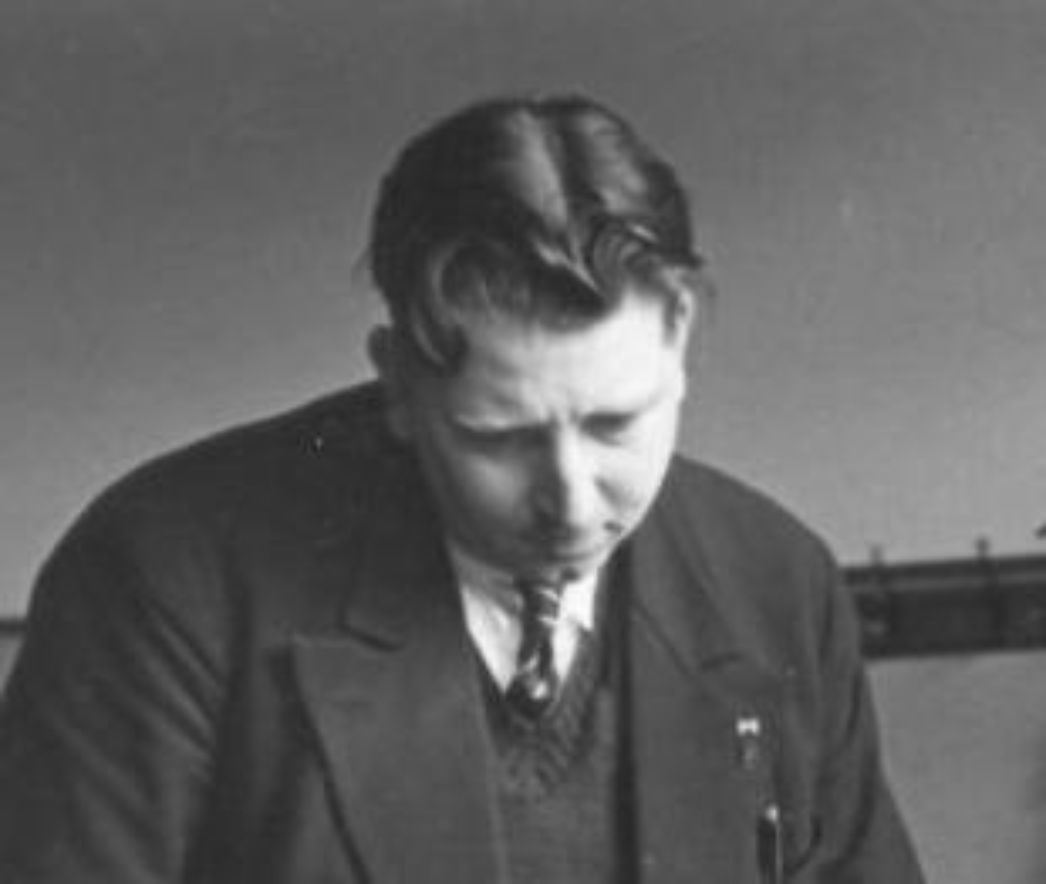
Narrator The arrest comes as a surprise. On the night of August 23, 1944, uniformed men pick up 48-year-old elementary school teacher Joseph Roth at his apartment in Bad Godesberg near Bonn. He is led away in handcuffs in front of his wife and three children. He is taken to the police station in Bonn and shortly thereafter to the so-called Messelager in Cologne: a Gestapo camp—for many, merely a stopover on the way to a concentration camp.
Joseph Roth is not the only one to fall into the Gestapo’s clutches that night. Across the German Reich, the police arrest over 5,000 men and a few women in a single operation—without any specific cause, without giving any reasons.
They are former members of the KPD, the SPD, and the Catholic Center Party. Most have not been politically active for over ten years.
Nevertheless, the regime considers them a threat. In the wake of the failed assassination attempt on Hitler, they are to be detained as potential resistance fighters as a preventive measure—regardless of whether there is any suspicion or not. The Gestapo had already compiled the relevant lists years earlier.
As a former Center Party official, Joseph Roth finds himself in the crosshairs of the wave of arrests. Born in Cologne, he comes from a deeply religious family; three of his brothers are Catholic clergymen.
Like his father—a successful decorative painter with his own business—Joseph became involved with the Center Party at an early age. In the 1920s, he served as the party’s chairman in Bad Godesberg, where he worked and lived as a respected elementary school teacher.
In politics, he emerged as an active opponent of the National Socialists. In 1933, this brought him to the attention of the new rulers for the first time: he was forced to resign from his political offices and was placed on compulsory leave for several months. Eventually, he was transferred to a village school—a professional demotion.
By the mid-1930s, the situation seemed to have calmed down. Roth, a family man, continued to work as a village schoolteacher and remained openly committed to the Catholic Church. Despite his age, he was forced to serve in the campaign in France before returning to his teaching career.
His arrest in August 1944 shows that the Nazis had not forgotten him.
After about three weeks in the “Messelager” in Cologne, the Gestapo deported Joseph Roth in mid-September, along with other victims of “Aktion Gitter”—the code name for the Reich-wide arrest operation—to the Buchenwald concentration camp.
Here he is one of over 700 so-called “Gitter prisoners.” Most of them—often men of advanced age—are released after a few weeks. This is because the unfounded mass arrest is met with widespread incomprehension among the population.
Joseph Roth’s family, too, leaves no stone unturned in their efforts to free the family man from the camp. And they succeed: at the end of October 1944, Roth is allowed to return to his family in the Rhineland under strict conditions.
But the months in detention have changed everything: Joseph Roth is seriously ill; despite medical care, he never recovers from the dramatic consequences of his imprisonment. Three months after his release, Joseph Roth dies surrounded by his family. In 2000, he is included among the martyrs of the Catholic Church. A belated tribute.