Transcript
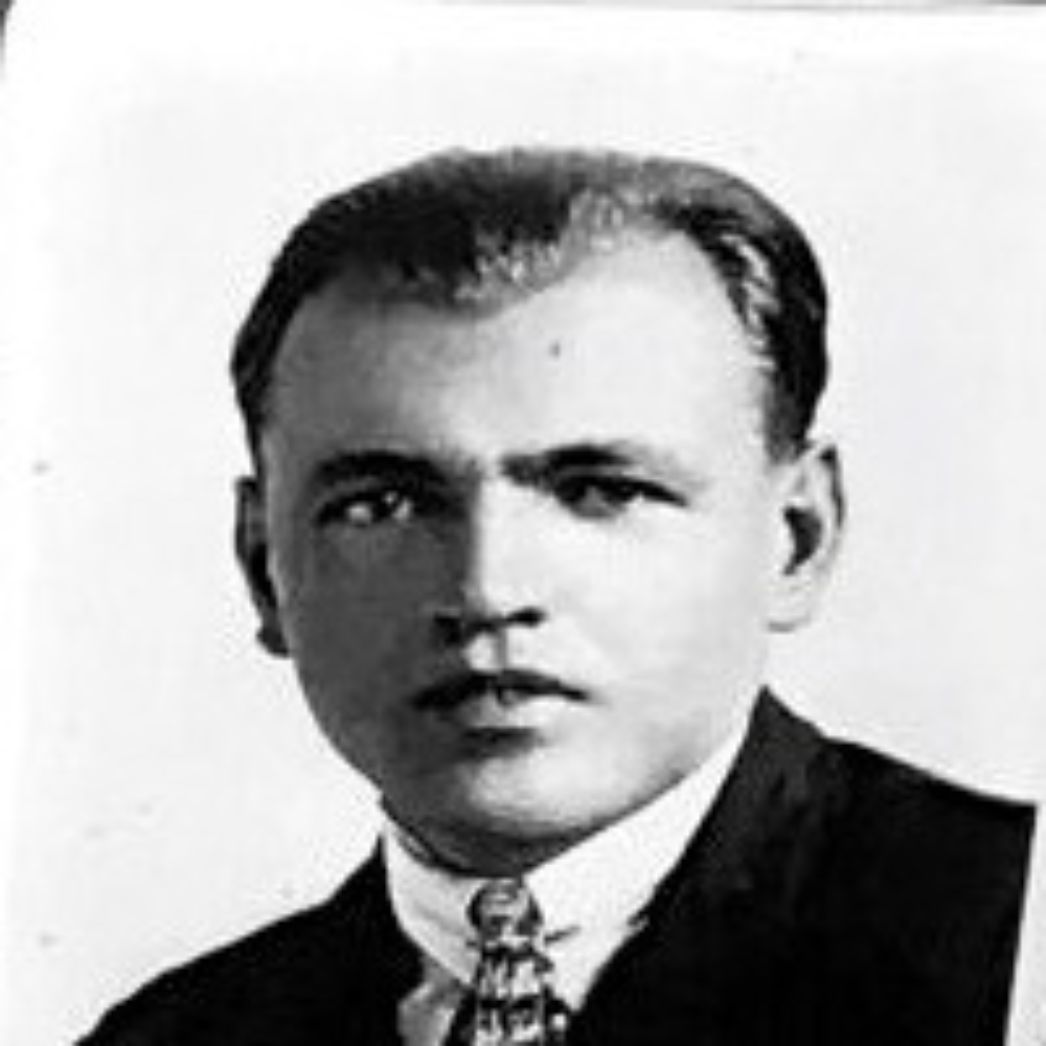
Narrator It is September 7, 1939. One week after the Wehrmacht’s invasion of Poland, Franz Schuster arrives at the Buchenwald concentration camp from Vienna. There, he is registered as a “political prisoner,” and the word “unfit for military service” is also noted on his prisoner identification card. Schuster is thus one of more than 700 men whom the Gestapo arrested at the start of the war and deported to Buchenwald. For months, they had all been on secret arrest lists of individuals whom the Nazis considered a “threat to internal security” in the event of war.
Franz Schuster comes from a working-class family. Even while training to become a technician, he is politically active in the Social Democratic Workers’ Party of Austria. He finds work as a city building inspector at the Vienna Electric Works and serves on the works council there. As commander of the Social Democratic Schutzbund, he takes part in the armed conflict between the Social Democrats and the authoritarian government in February 1934. When the fighting ends, Schuster is dismissed from his position for “political reasons.” He then became active in the “Rote Front” group, served as a member of the Central Committee of the Communist Party of Austria, and led the “Rote Hilfe.” At the end of 1934, he was arrested by the police and taken to the “Wöllersdorf Detention Camp.” The Austrian government imprisoned political opponents in this penal camp.
These included primarily Social Democrats and Communists, but also National Socialists. Franz Schuster was held there for four years, with a few interruptions. Following the so-called “Anschluss”—Austria’s annexation by the “German Reich”—the Nazis initially closed the camp, and most of the detainees were released. Franz Schuster was even allowed to return to work at the Vienna power plant.
Since conscription for men between the ages of 18 and 45 also applies in “annexed” Austria, Franz Schuster is examined for military service. Because of his several years of imprisonment in Wöllersdorf, he is considered to have a political criminal record and is thus, just like criminals sentenced to prison terms, excluded “from fulfilling his military service” under the Military Service Act. In the eyes of the National Socialists, he is deemed “unfit for military service” and receives a certificate of exemption from military service.
Two months before the start of World War II, the Reich Criminal Police Office orders the registration of all “unfit for military service” persons and decrees that they are to be placed in “preventive detention” “in the event of mobilization,” that is, upon the outbreak of war. On the basis of this decree, Franz Schuster was arrested by the Vienna Gestapo on September 1, 1939, and sent to Buchenwald concentration camp a week later.
At Buchenwald, he quickly made contact with other communist prisoners; Schuster soon began representing the Austrian prisoners on the International Camp Committee. After four years of imprisonment at Buchenwald, in September 1943, Franz Schuster died under unclear circumstances in the camp’s infirmary.