
Transcript
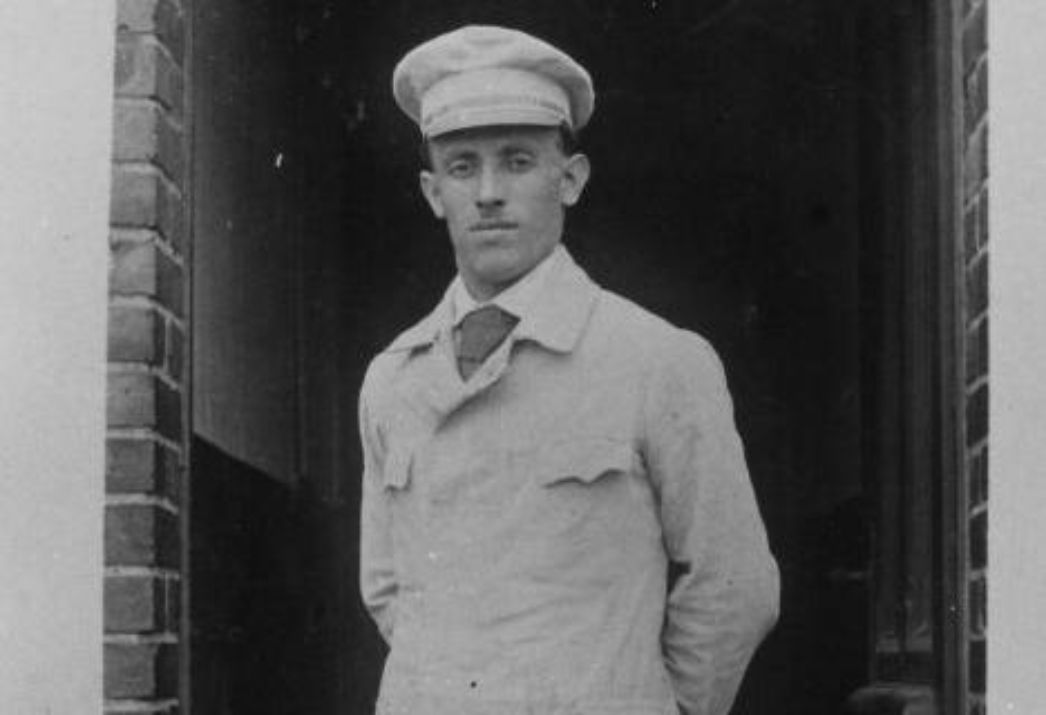
Narrator Faybusch Itzkewitsch is still full of hope. In prison, he dictates letter after letter addressed to his wife and son. He speaks German without an accent, but does not know how to write the German characters. As a result, he relies on the help of his fellow prisoners. When he is arrested in 1937 for “racial defilement” and sentenced to 15 months in prison, he can no longer imagine a future in Germany. In a letter dated June 25, 1938, he informs his wife that he intends to leave the country after his release in October 1938:
Itzkewitsch “After everything that has happened to me in recent years, I have decided to emigrate; this decision is irrevocable for me.”
Narrator Faybusch Itzkewitsch, who called himself Ferdinand, was born on August 15, 1891, in Lipsko, Russia. During World War I, he was taken prisoner by the Germans. After his captivity, he settled in Ehmen near Wolfsburg. Even though the German authorities rejected his application for naturalization, the town became his new home: the trained shoemaker opened a workshop where he made specialty footwear. He met Gudrun, a German woman, with whom he lived in a common-law marriage. In 1923, their son Horst was born.
His Jewish heritage played no role during those years. But when the Nazis enacted the Nuremberg Laws in September 1935, his relationship with his wife was suddenly criminalized. Now, love between Jews and Germans was a punishable offense. Soon, a neighbor denounced him for this, and in July 1937, he was arrested.
Ferdinand Itzkewitsch waits in vain for his release. On November 10, 1938, the Gestapo deported him to the Buchenwald concentration camp. Labeled a “racial defiler,” he was, in the eyes of the SS, among those at the very bottom of the forced community’s hierarchy—he was considered “outlawed.”
But even in Buchenwald, his fellow prisoners showed solidarity and helped him write letters. One of them, Sergius Meisel, wrote to Itzkewitsch’s partner Gudrun after his release from Buchenwald:
Meisel I was with Ferdinand until April 22, 1939. We lived like two brothers, slept bed to bed, and shared everything we had and received […] as brothers. […] I cannot and am not allowed to tell you anything about the last six months, but I implore you to do everything you can for Ferdinand so that he may be released.
Narrator All efforts to secure his release, however, prove unsuccessful. Buchenwald becomes a death trap for Ferdinand Itzkewitsch. At the end of June 1941, he writes his final letter to his son:
Itzkewitsch I’m in good health and hope the same is true for you. Please reply to this letter soon, as I would be very happy to hear from you. I send warm regards to you and your dear mother, and I am your Dad
Narrator About two weeks later, a “transport” leaves Buchenwald bound for Sonnenstein in Pirna, Saxony. All the people on this “transport”—selected as Jews and disabled—are gassed to death in the gas chamber there—including Ferdinand Itzkewitsch.