Transcript
Carl Mierendorff “Have the courage to stay here for once, Dr. Goebbels, and answer questions when a veteran speaks to you, so that we can see if you dare to look a veteran in the eye.”
Narrator Berlin, February 6, 1931. SPD Reichstag deputy Carl Mierendorff challenges Berlin Gauleiter Joseph Goebbels. Mierendorff is one of the most vehement critics of the rising National Socialists, whom he repeatedly attacks in the Reichstag. No, he certainly does not lack courage.
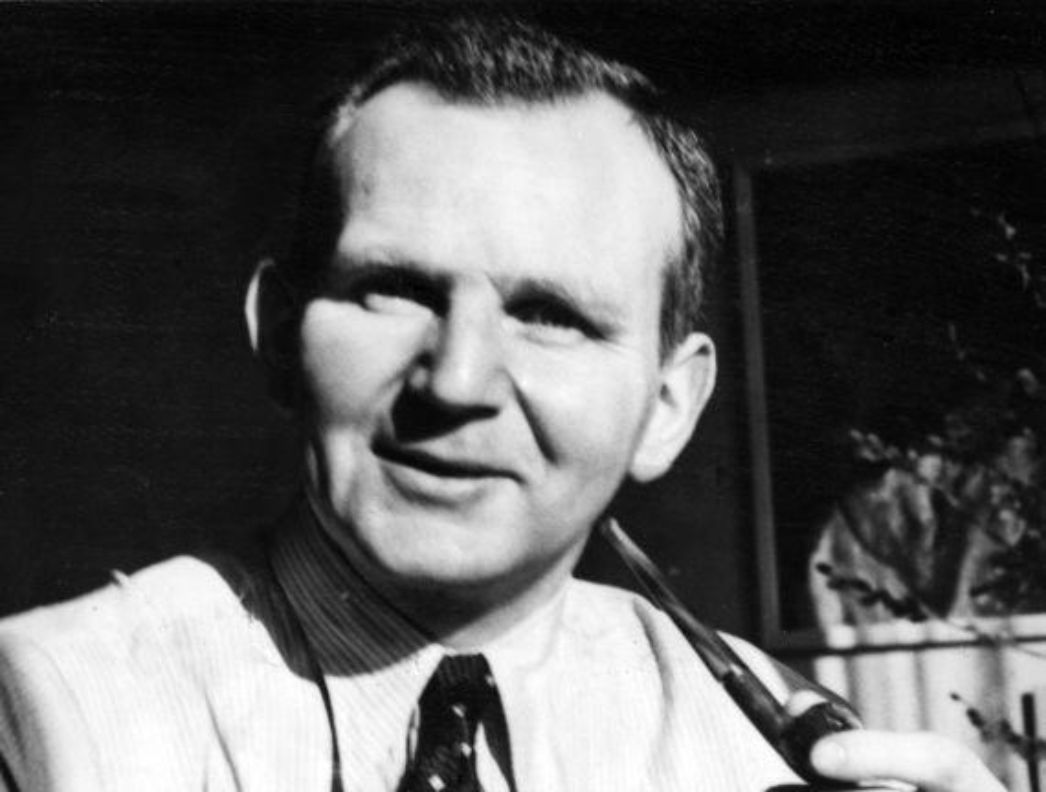
Carl Mierendorff—whom his friends call simply Carlo—is born on March 24, 1897, in Großenhain near Dresden. The family moves to Hesse. Their new home becomes Darmstadt. Mierendorff’s father is a textile wholesaler; his mother awakens her son’s interest in art and literature. After passing the emergency high school diploma, Mierendorff enlists as a war volunteer. As a soldier, he fought in Masuria and on the Western Front.
During the war, his friends in Darmstadt founded the literary and artistic journal “Die Dachstube.” His first literary works appeared here and in the “Bücher der Dachstube” series. “Die Dachstube” also published a text explaining Mierendorff’s turn toward politics. This declaration begins with the lines:
Carl Mierendorff “The times are calling for action! We are at the end! Now we must no longer remain silent and let ourselves be swept along by events.”
Narrator Art, it goes on to say, does not cease to be the ultimate goal. Yet they now find themselves at a point where art can only be measured by what it offers to life in its struggle. Mierendorff concludes with the words:
Carl Mierendorff “We can no longer and must not remain silent: We await you, friends, your most ardent hearts, your purest convictions! Step forward and summon your courage, seek direction, paths, and goals: An unstoppable will toward the future shall lift us up; let this be our most steadfast motto. Friends, take action!”
Narrator After the war, Mierendorff studied economics. Even as a student, he turned to politics. Initially, he did so through journalism: in 1919, he founded the magazine “Das Tribunal. Hessische radikale Blätter.”
After earning his doctorate on “The Economic Policy of the Communist Party,” he worked for the German Transport Workers’ Union, became editor of the “Hessischer Volksfreund” in Darmstadt, and secretary of the Social Democratic Reichstag faction. In 1930, he became the youngest SPD member of the Reichstag.
Mierendorff’s courageous fight against the Nazis did not go unpunished. In June 1933, he was arrested and, the very next day, dragged through the streets of Darmstadt by the Nazis. They hurled insults at him, calling him a “press pig,” “scoundrel,” “vagabond,” and “traitor to the workers”; in prison, he was beaten and kicked. Afterward, Carlo Mierendorff disappears into the concentration camp system: Osthofen, Börgermoor, Lichtenburg, Esterwegen, Buchenwald.
Finally, in 1938, he is released from Buchenwald. His longtime girlfriend has since married a high-ranking NSDAP official. A heavy blow in his personal life. Yet he does not let it get him down. For him, whom the time in the concentration camp has not broken, the fight against Hitler remains the order of the day. He joins the “Kreisau Circle,” the resistance movement led by Count von Moltke and Count Yorck von Wartenburg. His code name is “Dr. Friedrich.” Mierendorff drafts a programmatic paper: the call for “Socialist Action.” This initiative calls on Christians, socialists, communists, and liberals to act together. It becomes his legacy. On December 4, 1943, Carl Mierendorff is killed in a bombing raid on Leipzig.