Transcript
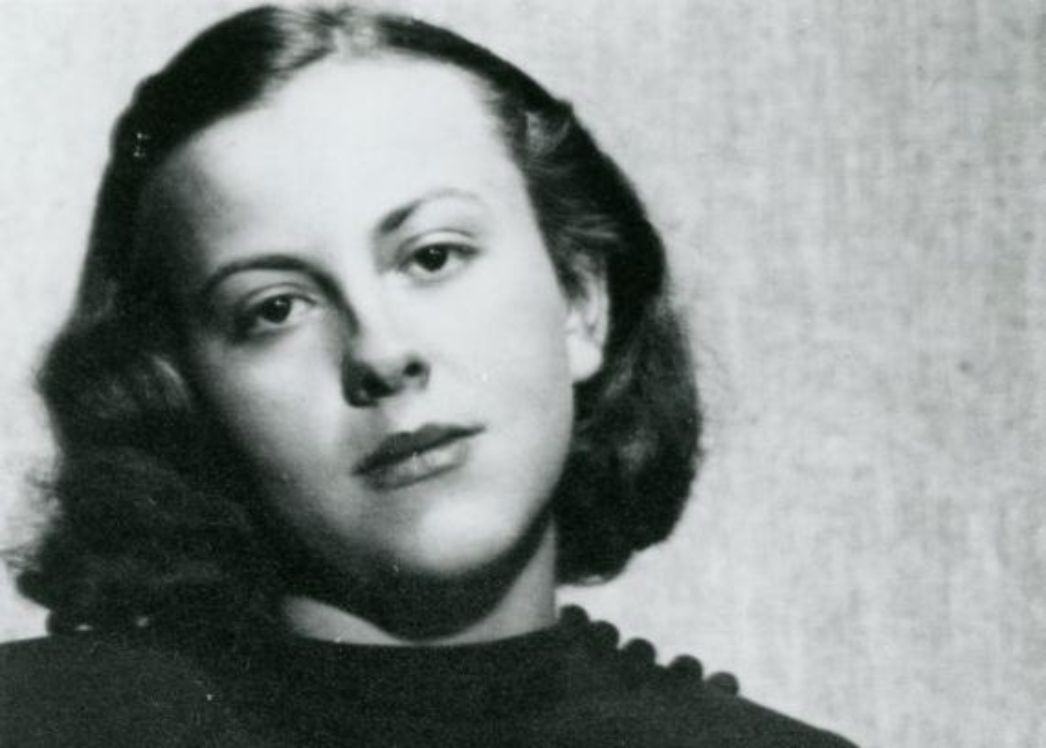
Narrator When the Gestapo arrived at her apartment door in Prague, Alena Divišová was 19 years old. She was taken to the dreaded Pankrác Prison. The charge was “activities hostile to the Reich.” What had happened?
Alena comes from a working-class family. When the Wehrmacht occupied Czechoslovakia in March 1939, she had just finished school. Her father is a foreman at a piston factory; her mother is a housewife. Because her father advises her to learn a trade, she begins an apprenticeship as a seamstress. During her training, she befriends a Jewish classmate who is preparing to emigrate to Palestine. Through her, 16-year-old Alena comes into contact with a communist resistance group. This friendship fuels her outrage over the persecution of the Jewish population.
Alena helps: she buys food that her friends are not allowed to buy, and takes a Jewish child to a children’s theater that Jews are not allowed to attend.
But the living conditions of her Jewish friends worsen from month to month. In October 1941, the deportation of Prague’s Jews begins, first to the Łódź Ghetto, then, starting in November, to the newly established Theresienstadt Ghetto. Disease and hunger prevail there. Jindřich Lekner, a Jewish friend of Alena’s, is among the deportees. Risking her life, she smuggles food to him in the Theresienstadt ghetto.
Some of the Jewish members of Alena’s resistance group manage to go into hiding, however; she helps them live underground: Together with her fiancé, Jani Lebovič, she procures forged identity documents and certificates of descent from parish offices, and steals ID cards from the locker rooms of the piston factory where her father works. They also help those facing political persecution.
When the Gestapo tracks down one of the fugitives, they find a book with Alena’s name in his hiding place. She is arrested but does not betray her friends. Nevertheless, the other members of the group are exposed six months later. Shortly thereafter, the SS murders her fiancé Jani in Auschwitz.
In the summer of 1944, Alena Divišová is transferred from Prague’s Pankrác Prison via the so-called “Little Fortress of Theresienstadt” to the Ravensbrück women’s concentration camp. From there, the SS successively transfers her to the Buchenwald satellite camps of Schlieben and Altenburg, where she is forced to work in armaments factories.
In April 1945, the SS forced the prisoners to march. Alena escaped along the way. With the help of Czech forced laborers, she went into hiding until the end of the war.
She returns to Prague and starts a family. She studies at Charles University and later works as a historian at the Institute of Military History. Her area of expertise becomes the German occupation of Czechoslovakia and the communist resistance. In 1991, the Israeli memorial Yad Vashem honors Alena Hájková as “Righteous Among the Nations” for her selfless dedication.