
Transcript
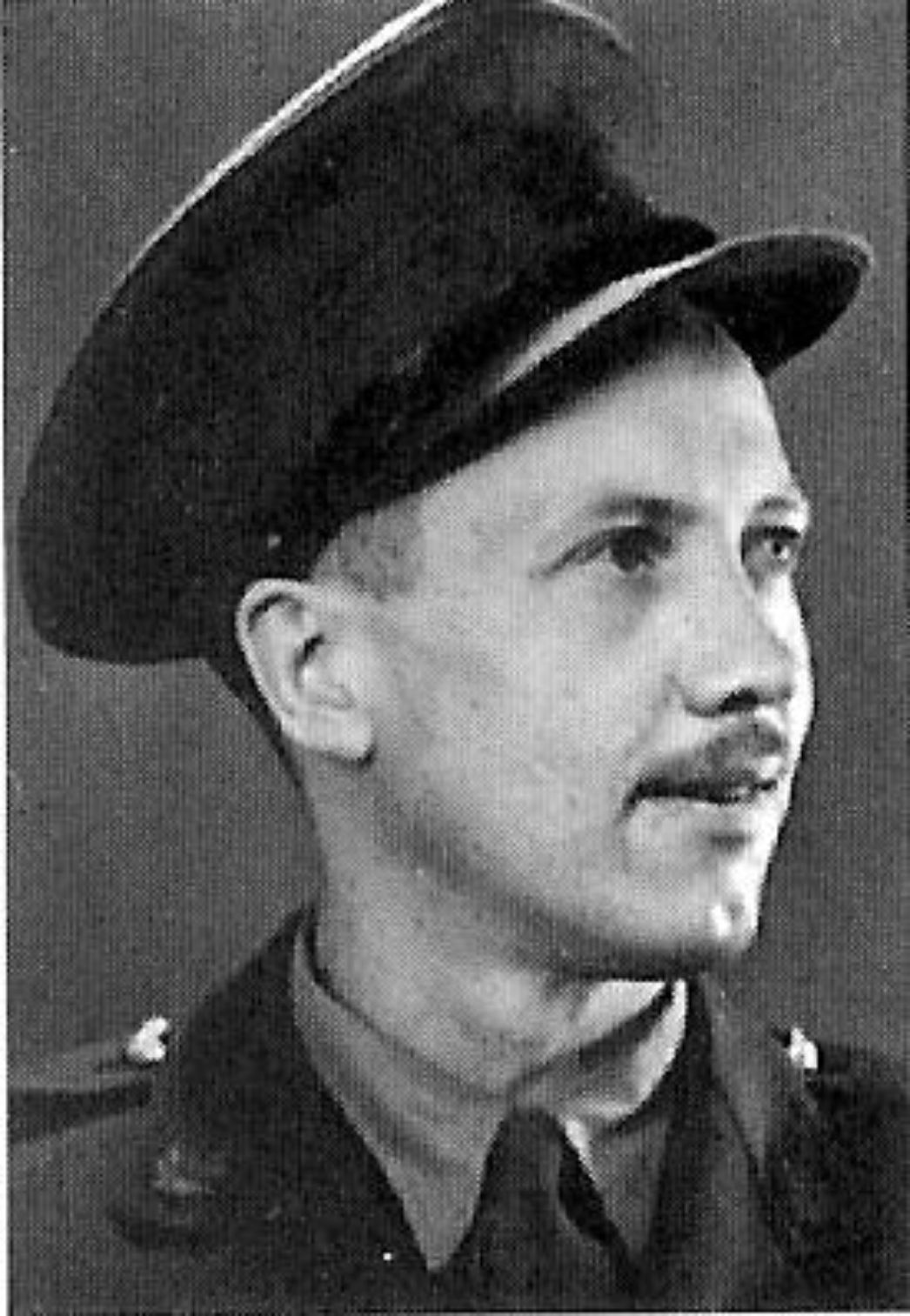
Narrator In 1934, the young Canadian visited Europe for the first time. He was thrilled with Germany; he wrote to a friend in Winnipeg:
Pickersgill “Germany is fabulous. […] People all seem very hopeful about the future, and most seem highly satisfied with the regime. I really think it’s a good thing, though I suspect saying something like that is a bit heretical.”
Narrator Frank Pickersgill is literally from the heart of Canada. He grows up on a farm. In Winnipeg and Toronto, he studies languages, including German and, above all, French. He is considered extremely intelligent and adventurous, but also somewhat aimless.
Pickersgill “If I were to end up in the war, I’d rather be with the French than with anyone else […]. Returning to Canada would be only a very last resort.”
Narrator In August 1940, he was arrested as an enemy alien. He spent 18 months in prisons and internment camps before managing to escape to unoccupied southern France. His family tried to persuade him to return to Canada, but his imprisonment had left its mark:
Pickersgill “I’ve seen and done a few things that have changed my outlook quite radically. After seeing a French soldier beaten to death by German police in Quimper, after nearly starving to death in a gravel pit near Montreuil Bellay and contracting blood poisoning when I was forced to erect barbed-wire barriers without gloves, and after sawing my way out of a barred window in St. Denis and spending four months in Lyon distributing illegal propaganda for the Americans, never quite sure from one day to the next when I might… be arrested—well, I’m afraid I’d find it pretty hard to sit around as a desk jockey in Ottawa for the duration of the war, trying to convince myself it was ‘useful work.’”
Narrator Pickersgill finds such a job in London, where he arrives in late 1942: military intelligence is seeking experienced personnel for the Special Operations Executive, or SOE for short. The tasks of this espionage unit include establishing resistance networks in occupied France, recruiting members of the Résistance, and fighting the German occupiers. Pickersgill enthusiastically completes his agent training, learning to parachute, tail people, drive locomotives, and kill silently.
Pickersgill “I couldn’t have gone back to Canada […] I’m afraid I feel far too combative to be happy 4,000 miles away from the Nazis.”
Narrator In mid-June 1943, the time has come: Frank Pickersgill parachutes behind enemy lines. Southwest of Paris, he is tasked with helping to expand a resistance network to sabotage German supply lines. But the Germans are in the process of dismantling the secret network: hundreds of arrests, a severe blow to the SOE and the Resistance.
Soon, Pickersgill also falls into the hands of the German security service during a roadside check: He is imprisoned and tortured in the notorious Fresnes prison near Paris. Shortly before the liberation of Paris, Pickersgill is taken to Buchenwald along with three dozen other SOE agents. Like almost all of his colleagues, the SS also murders the Canadian in the basement of the crematorium.